
Find local gems and support your community with ease
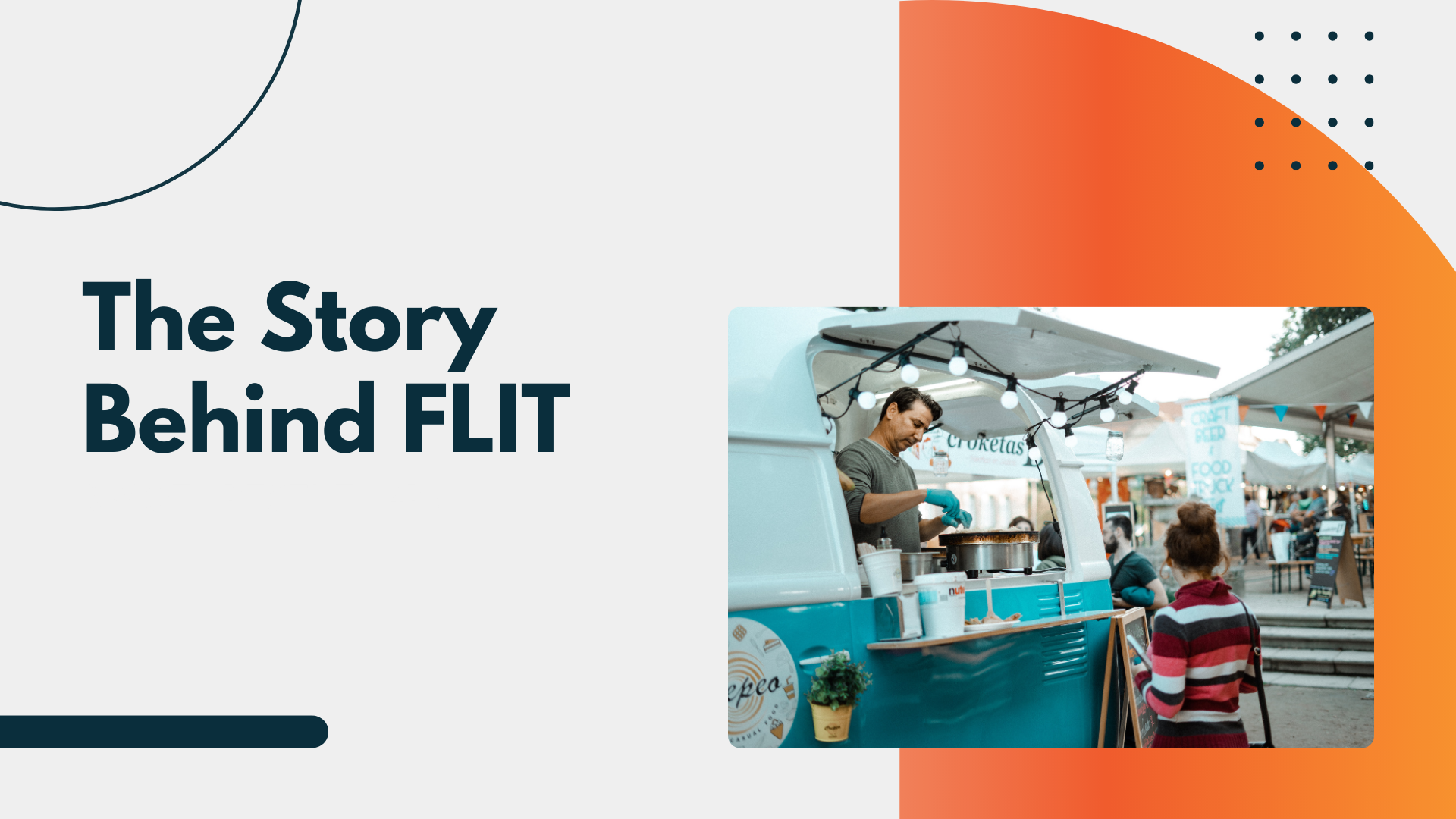
FLIT, a platform I launched, designed and built to promote pop up and pop-up markets. In 2020, I learned there is no one central map of all of the vendors popping up around the city and found it hard to keep track of some of my favorites as their locations are always changing. And the pandemic socioeconomically us from this this moving economy, making it harder for consumers to find and support those with irregular operations and business hours.
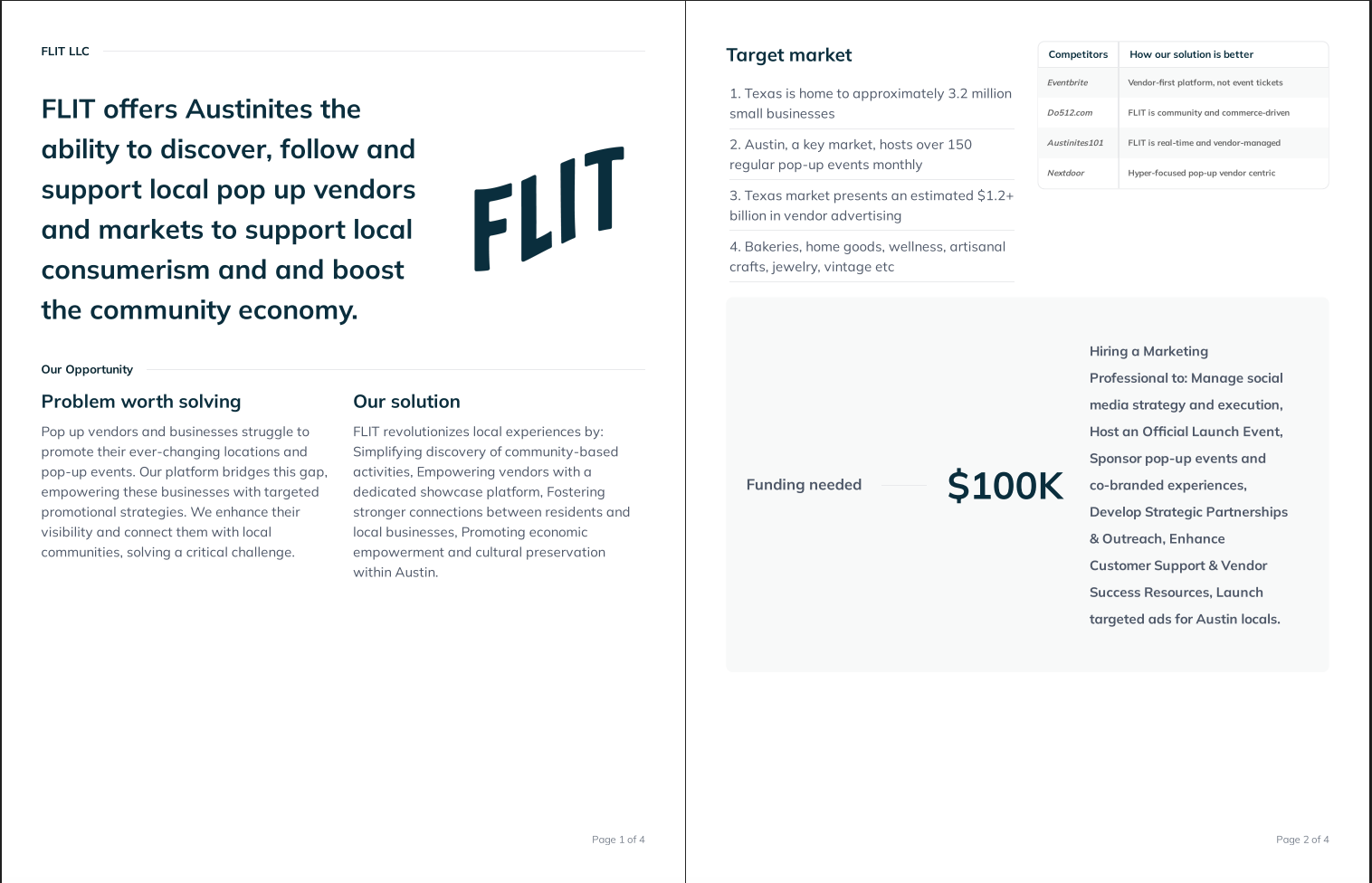
The mission is rooted in supporting and promoting local pop up brands and talent and building a setting for creative communities across the city. FLIT's vision is to create a platform with a real time map of pop-up vendors and their events that encourages supporting and shopping in our communities, to preserve local economies, values and local authenticity. It's about supporting local economic empowerment 💪🏽
Overview of my roles
Founder, UX Designer, Product Designer, Product Manager, Project Manager, Hiring Manager, Researcher, Social Media Manager
I transitioned from UX Designer to wearing the Product Manager hat by necessity. With no blueprint, I learned how to scope, prioritize, and define an MVP roadmap for FLIT. Instead of treating FLIT as just a design exercise, I led it like a product: defining success metrics, setting clear objectives, and driving execution through agile practices with a small dev team.
Responsibilities: I am the primary point of contact for users seeking platform tech assistance, responsible for learning how users experience technology through research and building persona mental models to prioritize features, functionalities and interactions to build the MVP scope, managing technical issues, triage/research bugs, escalate issues to Developer hire, and create robust documentation to properly show a pattern of behavior/user friction, relay issues, instruct how to recreate bugs and define expected behaviors, Recognize and connect patterns in the ecosystem to shape the solution and user experience technology and implementing experience improvements, make feature requests, bring to attention opportunities to create user empowering solutions, as well as productivity enhancements to solve community issues, curate the stories of the patterns via a Trello board and maintain the health of FLIT’s UX.
How it started
Leveraging my own career skillset, experience and knowledge, I conducted my own field research, to analyze the industry, it's players, understand its friction points in order to map out a MVP solution.

2025:
A Pivotal Chapter
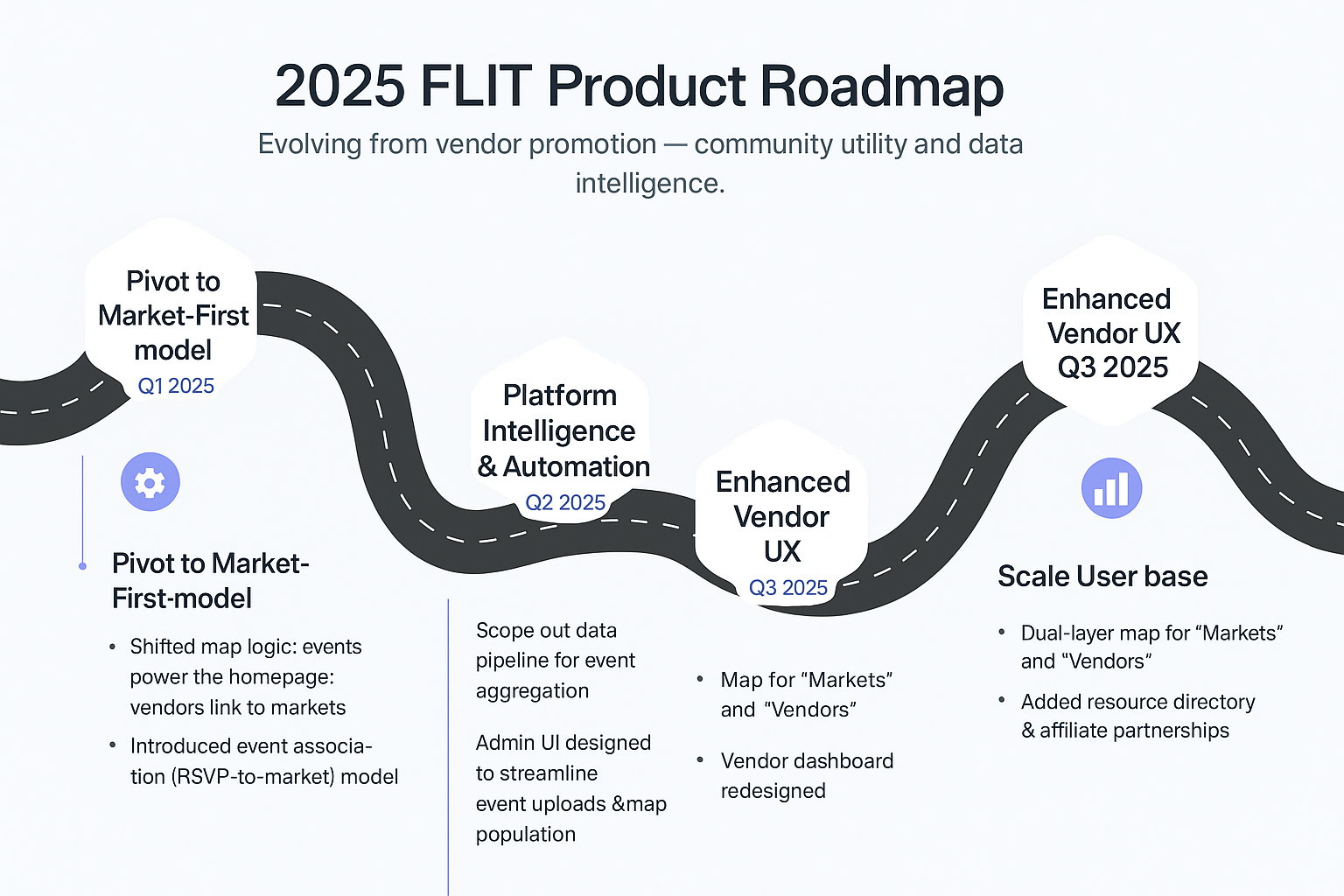
Product Market Fit Pivot
A Pivotal Chapter
Product Market Fit Pivot
I learned from SHORTCOMINGS, iterated, pivoted, and identified a stronger business model
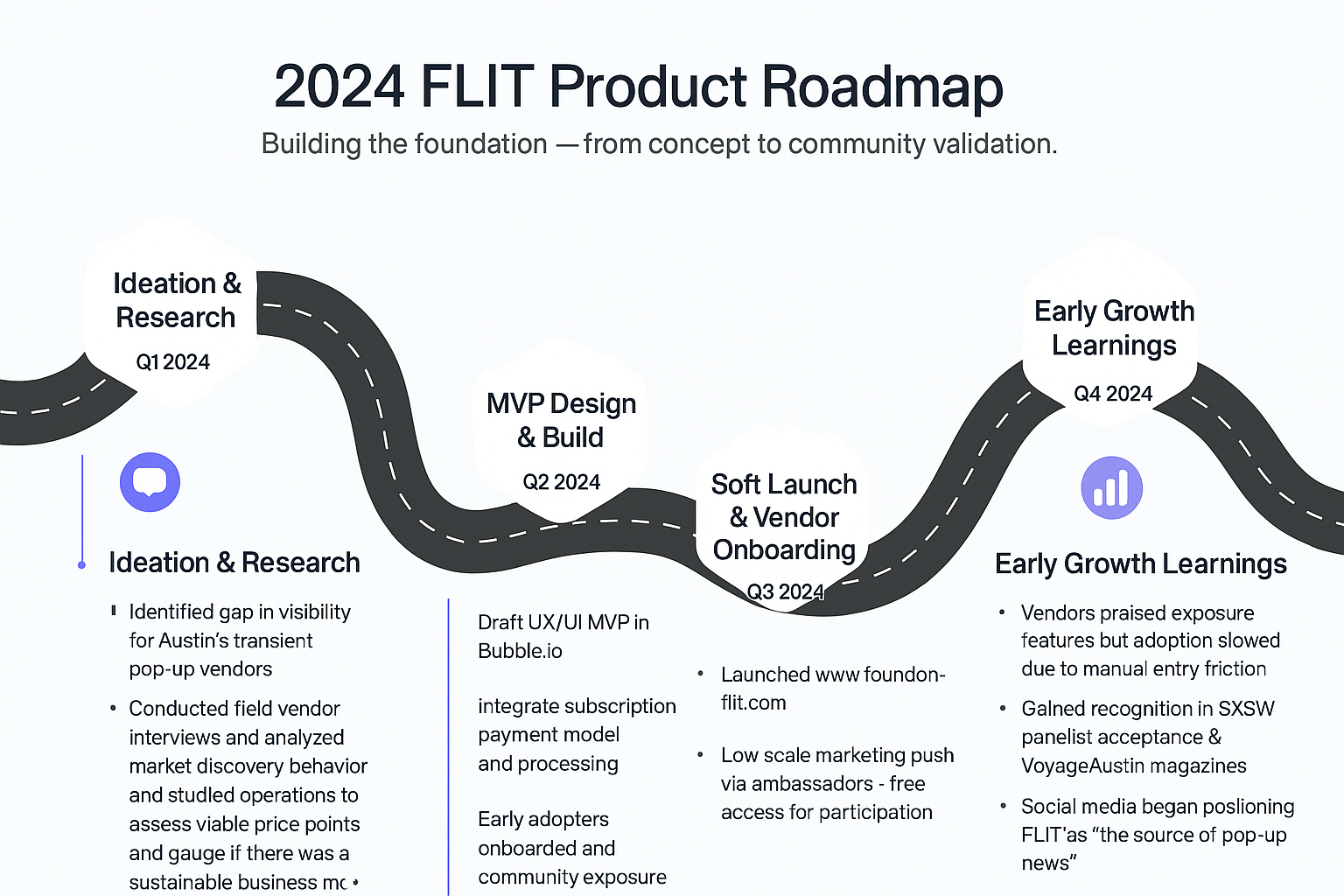
2024 MVP Learnings and Insights
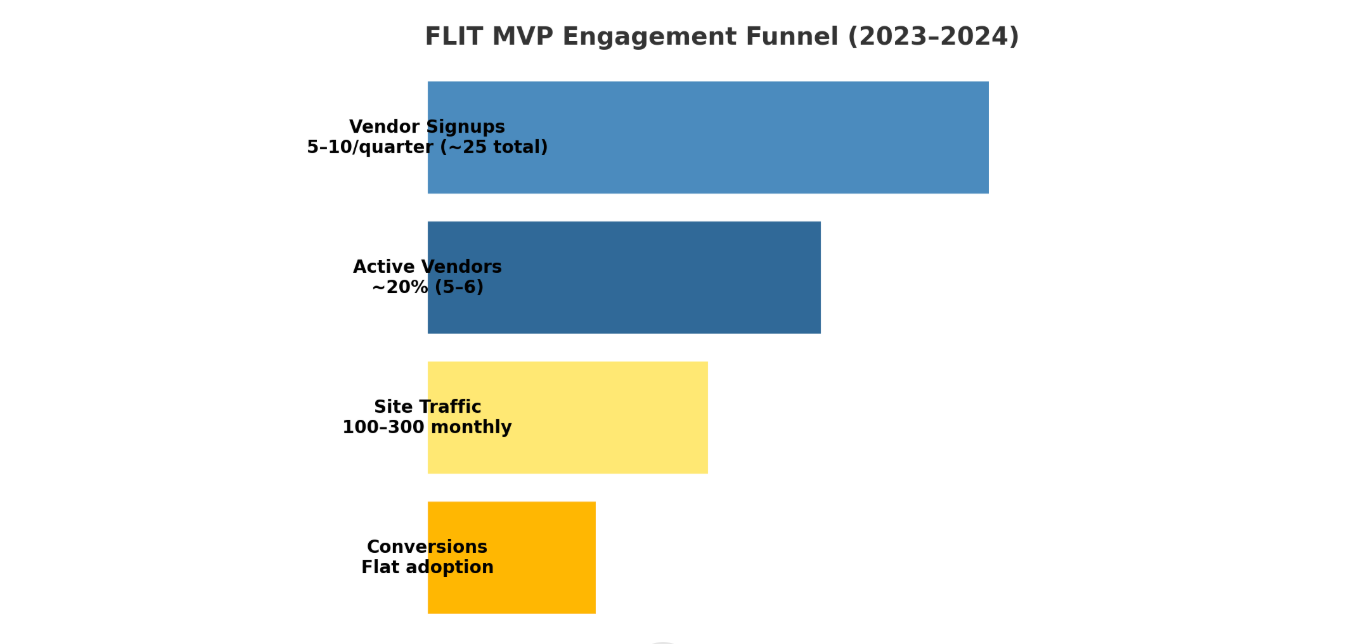
FLIT launched in 2024 with strong initial traction, positive press coverage, and vendor interest. However, by Q3/Q4, growth stalled. Vendors—facing economic pressures and election-year uncertainty—were hesitant to pay for yet another promotional channel, and without a strong consumer audience to drive ROI, adoption slowed.
FLIT launched in 2024 with strong initial traction, positive press coverage, and vendor interest. However, by Q3/Q4, growth stalled. Vendors—facing economic pressures and election-year uncertainty—were hesitant to pay for yet another promotional channel, and without a strong consumer audience to drive ROI, adoption slowed.
Challenge: Vendors wanted visibility but weren’t incentivized to manually input their schedules.
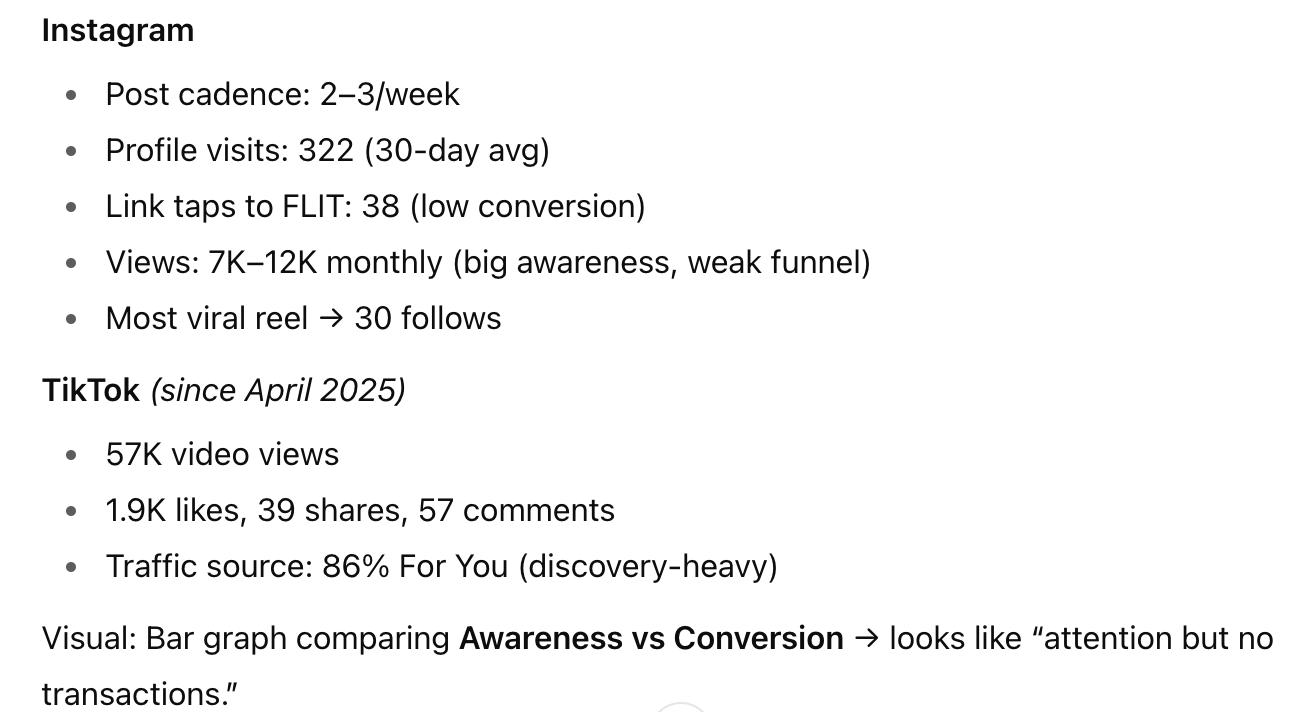
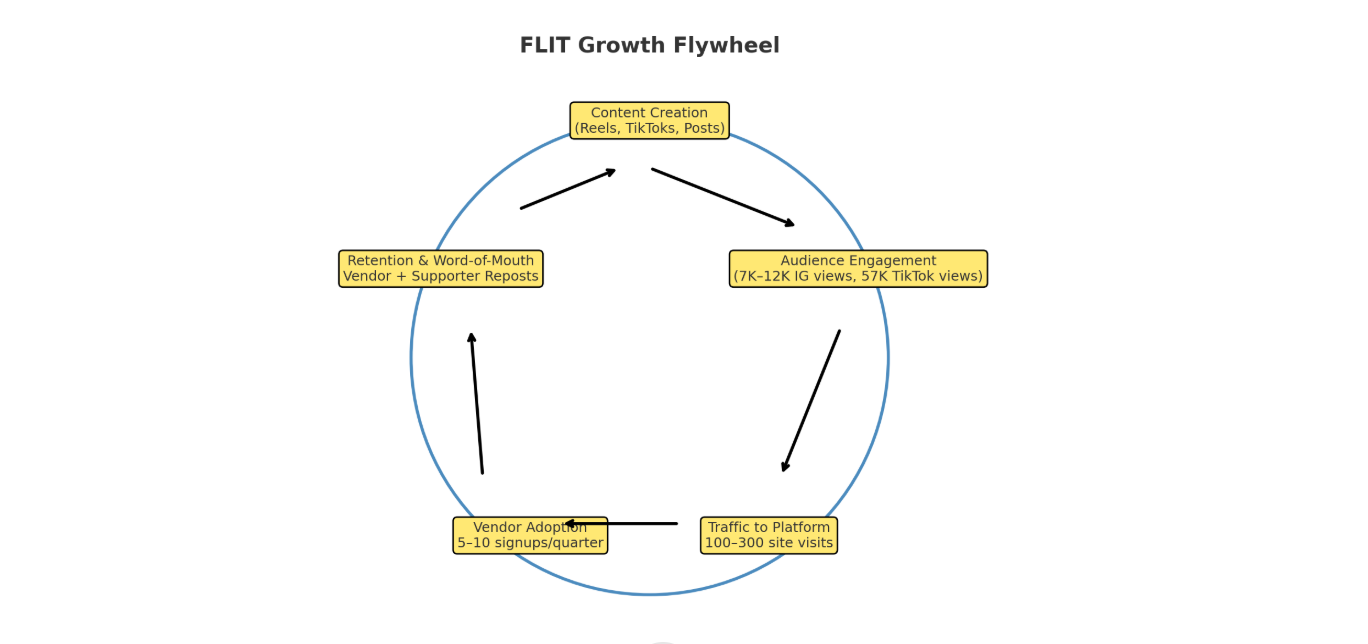
Experiment: I began manually sourcing and posting weekly market events from fragmented sources (social media, email lists, forms). This positioned FLIT as the expert source and grew brand awareness. Content gained 1K+ weekly views and engagement from vendors/supporters, but conversions lagged.
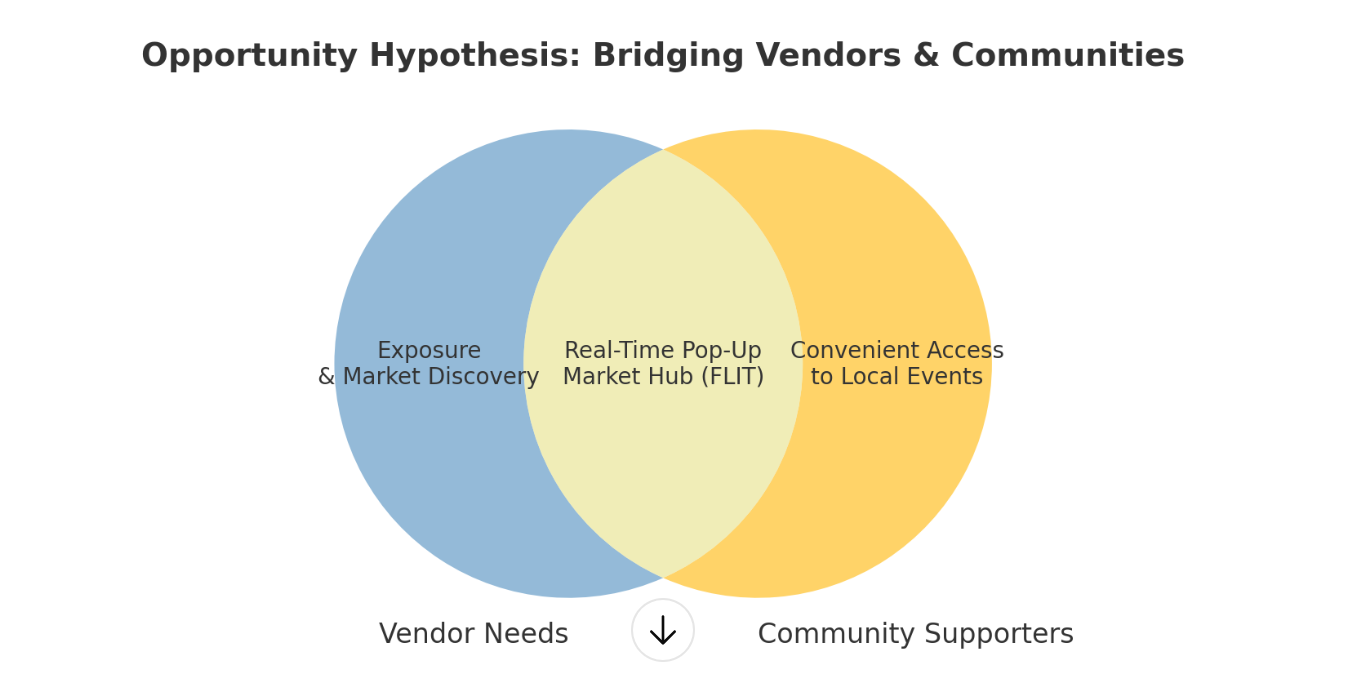
Insight: Vendors aren’t just looking for exposure—they need vending opportunities. Supporters want a single reliable hub. Market organizers want promotion and vendor recruitment. FLIT’s original vendor-first model was too narrow.
TL;DR: Our MVP asked vendors to self-enter events, but vendors were too busy, hosts were invisible in the system, and the map lacked reliable supply. How might we rebuild FLIT so the data powers the product, not the other way around?
Hypothesis Statement
If FLIT evolves from a vendor self-service tool into a curated event discovery + registration hub, then we can increase vendor adoption, retention, and audience engagement by reducing data-entry friction and offering dual-sided value to both vendors and organizers.
How might we redesign FLIT so that it meets the real behaviors and constraints of our core users: time-strapped vendors, visibility-hungry market hosts, and discovery-driven locals, instead of relying on the unrealistic assumption that vendors would generate the platform’s data themselves?
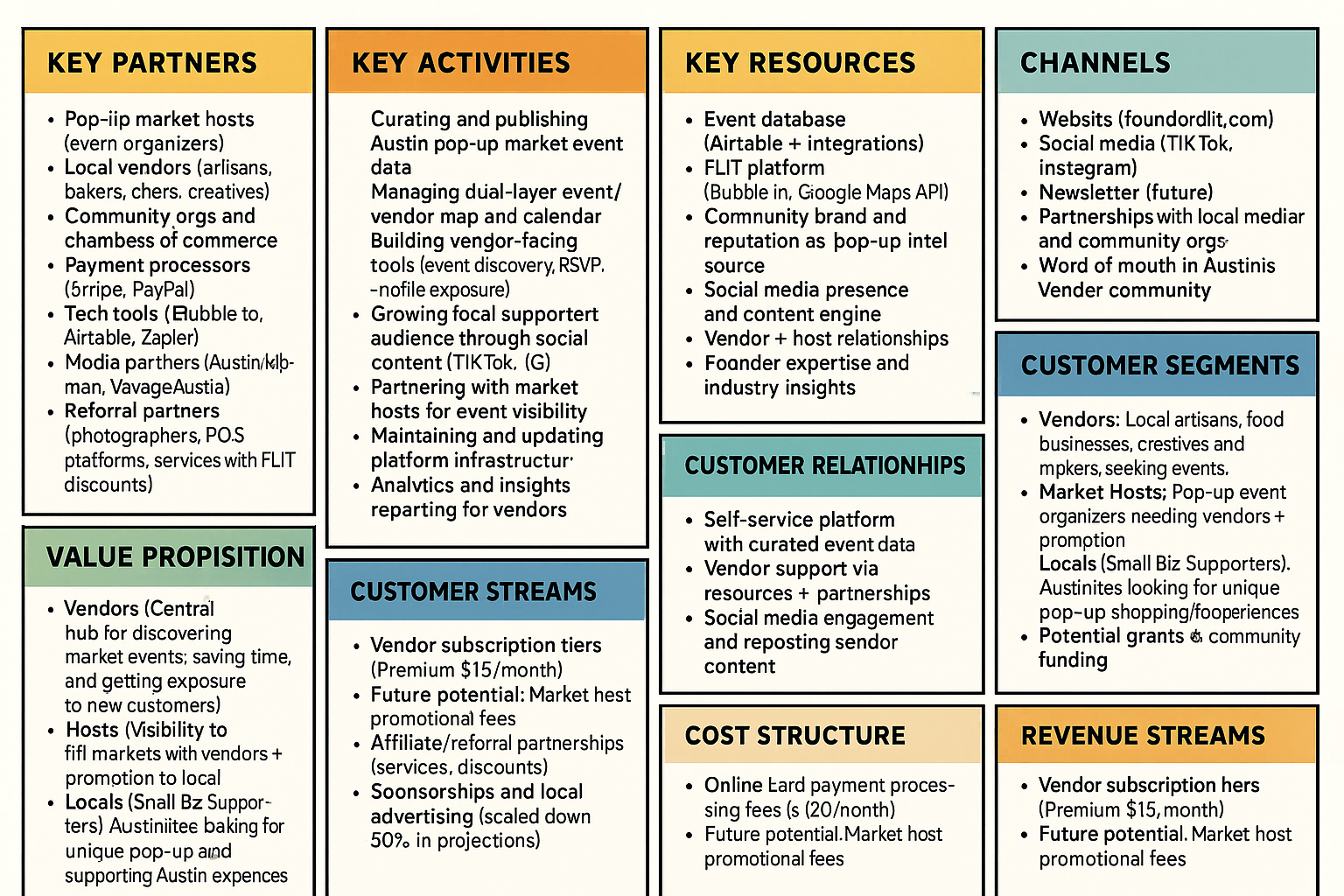
Business Model Canvas, 2025
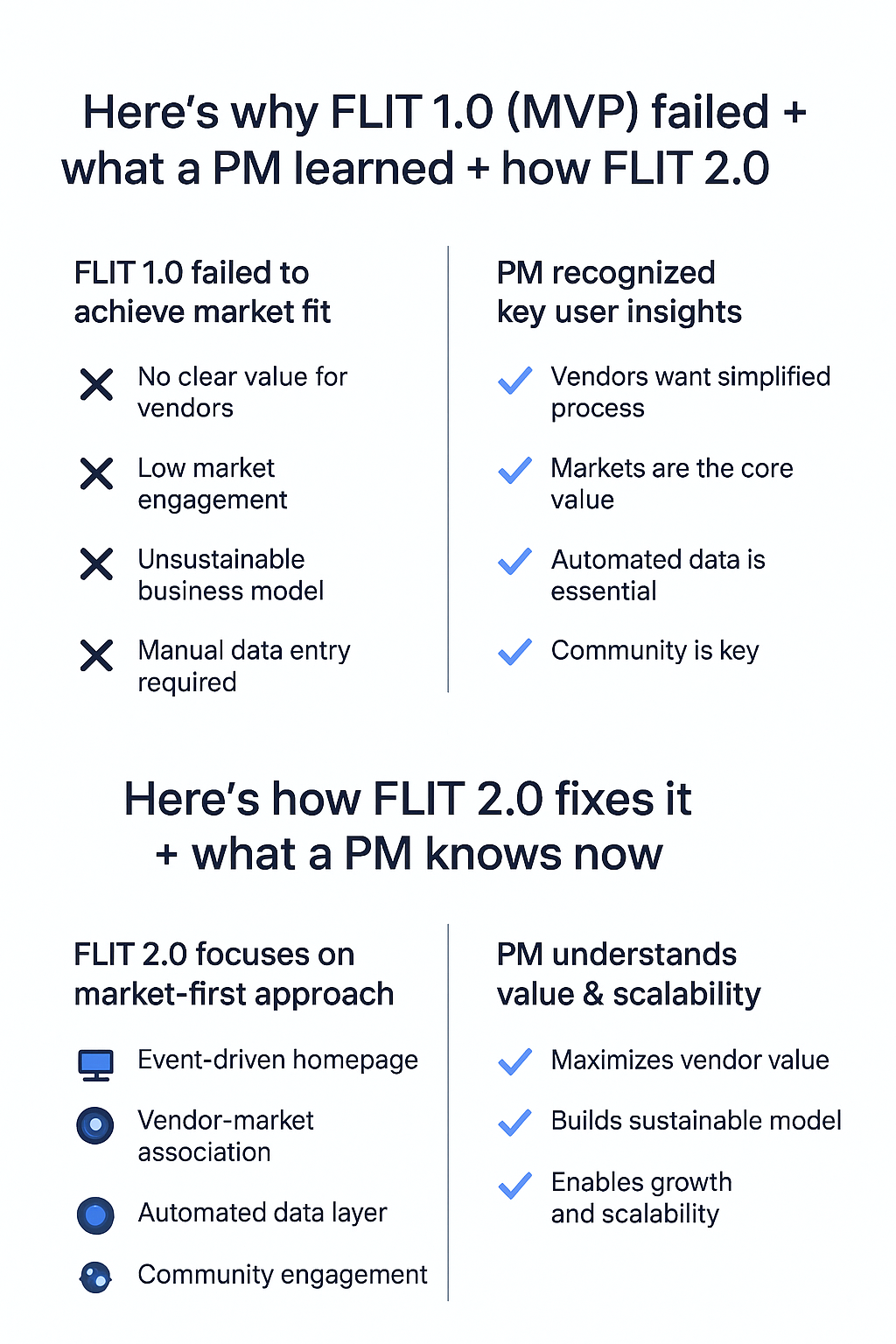
From Vendor Tool → Community Utility
The original concept of a vendor-focused promotional tool is now pivoting into a community utility—a real-time Austin Pop-Up Market Discovery & Connection Hub — shifting from a vendor-managed promotional tool into a dual-sided community ecosystem. Vendors aren’t just looking for exposure; they’re also looking for vending opportunities and in order to do so, we’ll need to create an ecosystem of pop up markets (planning to event day). This requires front-loading and a lot of data entry to provide this information because it currently exists across many different ways and not all of them are websites - some are forms or just plain email. It is hard work but this would be the most valuable incentive to vendors and neighbor audiences but I want to smart about how I organize this data entry effort. I started brainstorming better ways without bottleneck or gatekeeping of crucial market data—but the time cost would be unsustainable as FLIT scales. I need and want to reduce or automate manual entry while retaining curated value by considering introducing smarter integrations and workflows.
TL;DR
- Analyzed user behaviors and adoption blockers
- Ran experiments (manual sourcing, social media)
- Identified new problems and opportunities
- Pivoted the model to address supply + demand
- Proposed a sustainable tech solution (automation + integrations)
- Ran experiments (manual sourcing, social media)
- Identified new problems and opportunities
- Pivoted the model to address supply + demand
- Proposed a sustainable tech solution (automation + integrations)
New Model:
Prior: Vendors manually enter event schedules → appear on map.
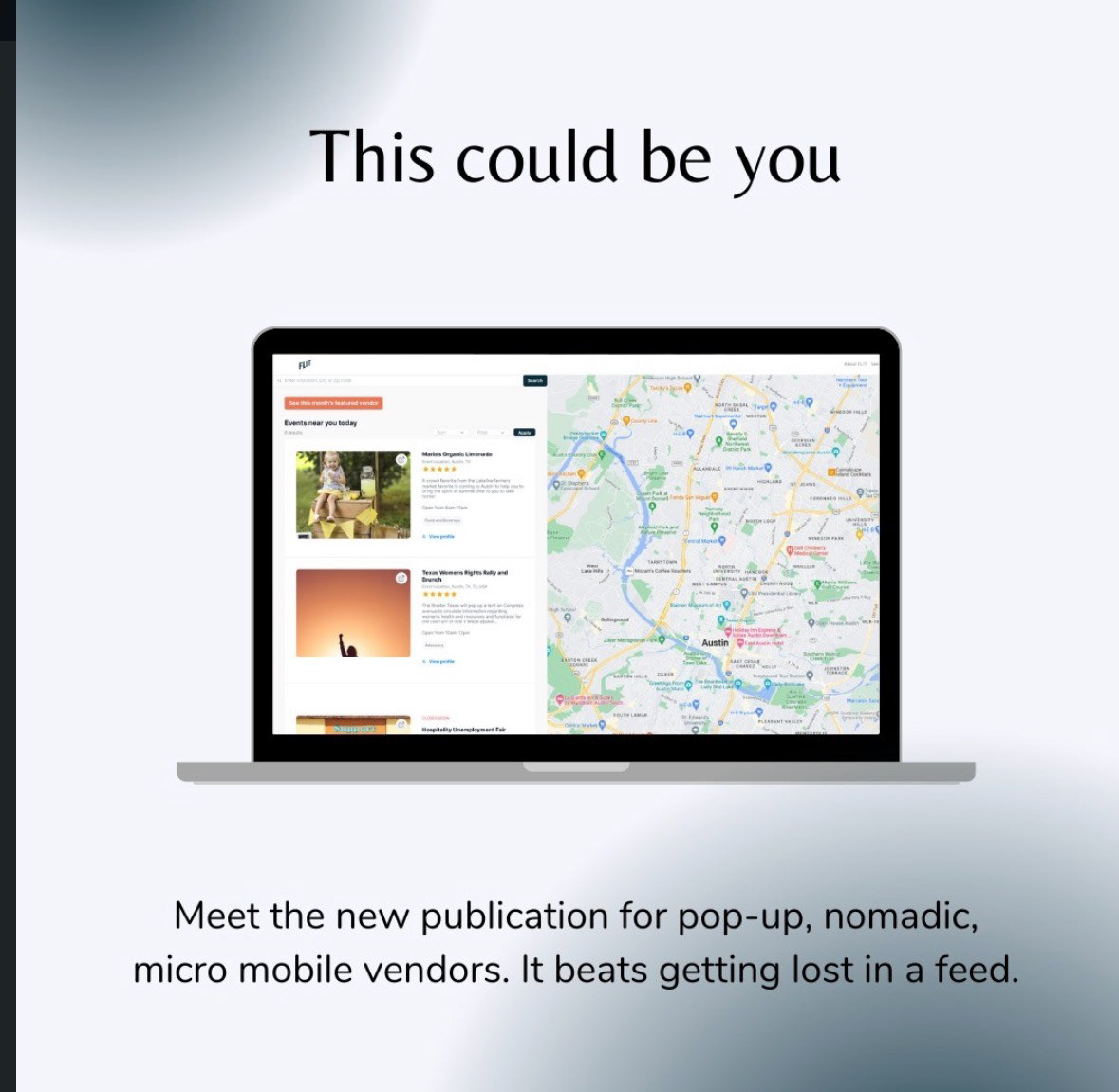
Now: Map is powered by an event calendar database → vendors “associate” themselves with markets they join.
Now: Map is powered by an event calendar database → vendors “associate” themselves with markets they join.
Goals:
1. Add value through membership-based models (vendors get discovery and signup opportunities).
2. Turn the map into a market-first display (contextual, curated, always populated).
3. Create a duality of value:
To vendors → discovery + event registration
To supporters → discover markets, vendors, and local events
To organizers → promotion + vendor sourcing
2. Turn the map into a market-first display (contextual, curated, always populated).
3. Create a duality of value:
To vendors → discovery + event registration
To supporters → discover markets, vendors, and local events
To organizers → promotion + vendor sourcing
1. Adding value to membership-based models, optimizing top-of-funnel acquisition and retention/engagement
Problem: If vendors come to FLIT only to find markets, they might use the site passively and not pay for exposure.
Problem: If vendors come to FLIT only to find markets, they might use the site passively and not pay for exposure.
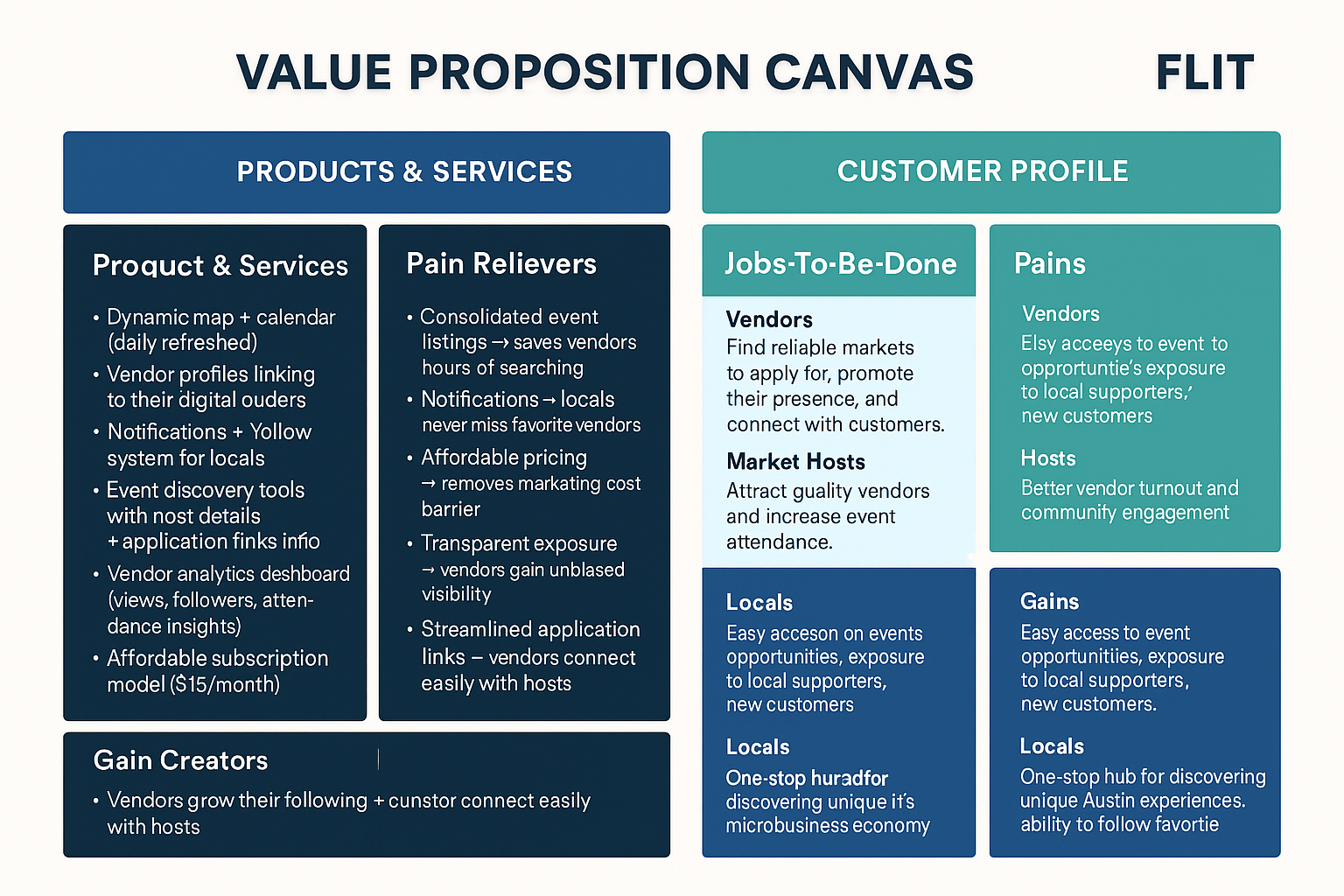
Solution: Turn FLIT into a dual-sided platform to add value to vendors (discovery + signup) and value to the public (who’s vending where?) without losing your original goal.
- Vendor Discovery Mode (as it is now)
- Event Opportunity Mode (new!)
- Event Opportunity Mode (new!)
2. Creating a duality of value to the event calendar database
-FLIT helps them promote the event to both vendors (looking to apply) and supporters (looking to attend).
-FLIT helps them promote the event to both vendors (looking to apply) and supporters (looking to attend).
Solution: Design an intake process to collect data
3. Pivot map's purpose to display markets
This gives FLIT flexibility to keeps things community-focused: vendors still have profiles, can be followed, and receive alerts. But the map now has context and continuity. Which removes the onus on vendors to input their own event schedule which was a too much to expect.
4. Social Media that convert fans into generating leads:
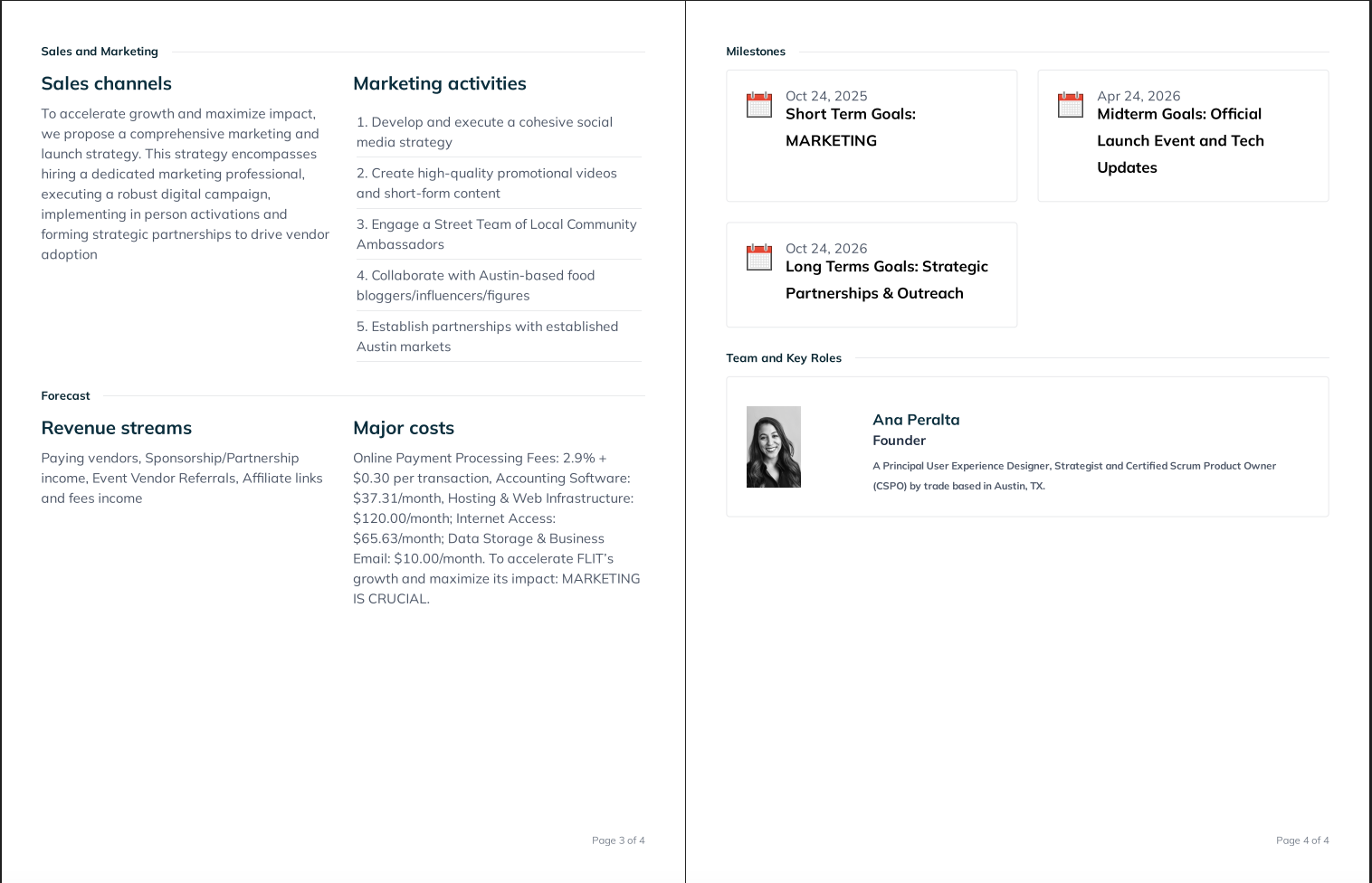
-These changes inspired more content opportunities for improved reach and engagement. TikTok Strategy Boost Weekly Series Ideas such as “Market Matchup Mondays”: Highlight 2–3 weekend markets with signup links.
“Vendor Vibes”: Interview vendors on TikTok or use clips from their booth and micro-influencer collaborations.
“Vendor Vibes”: Interview vendors on TikTok or use clips from their booth and micro-influencer collaborations.
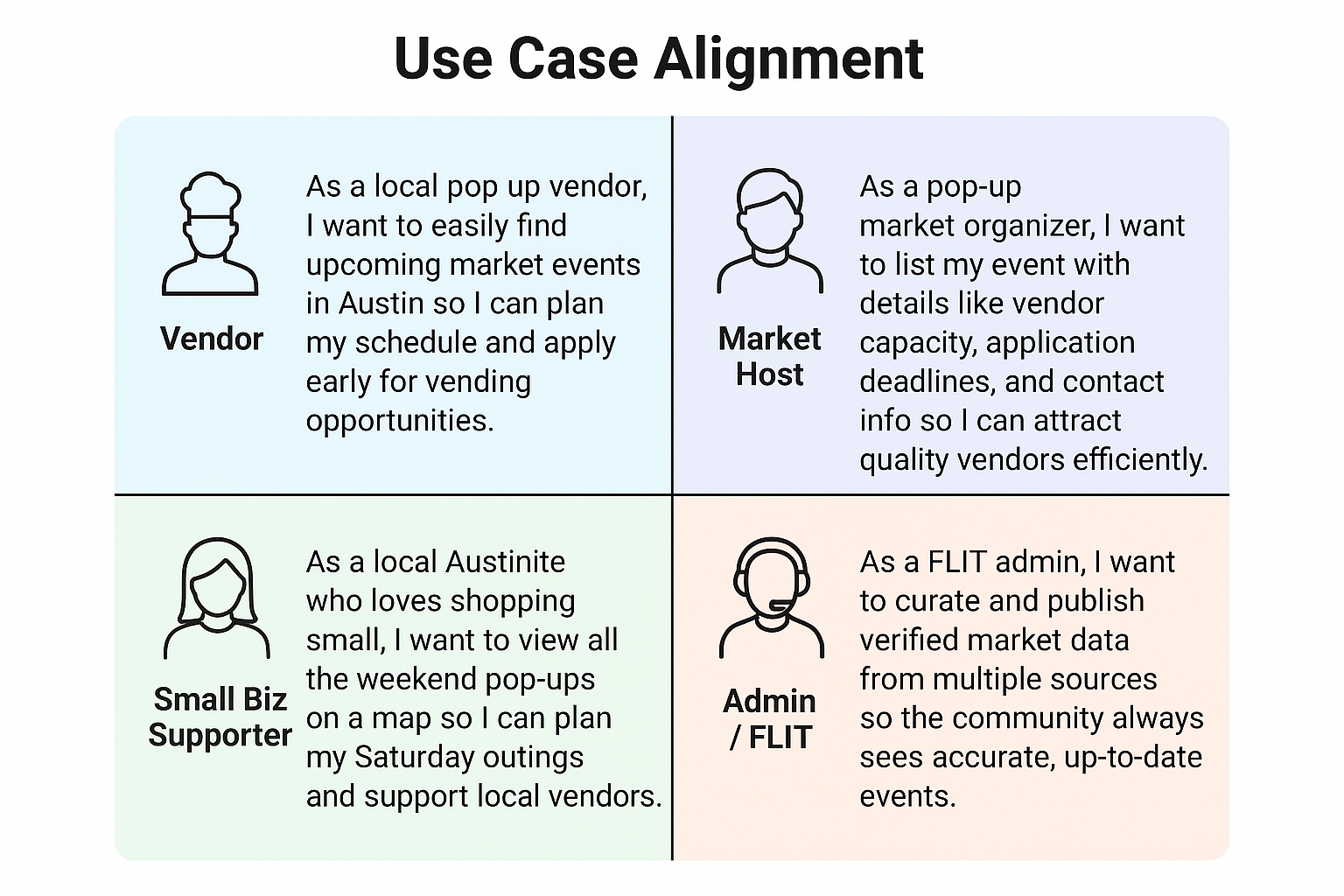
Use Cases from Priority Discovery
Vendor Personas
“As a local pop-up vendor, I want to easily find upcoming market events in Austin so I can plan my schedule and apply early for vending opportunities.”
“As a baker who frequently pops up at different markets, I want to mark myself as attending an event so my followers know where to find me next.”
“As a new artisan vendor, I want to see which markets fit my category and audience so I can apply to the right ones and maximize my sales.”
“As a vendor with limited time, I want FLIT to automatically update my event calendar when I RSVP to a market so I don’t have to enter data manually.”
Market Host Personas
“As a pop-up market organizer, I want to list my event with details like vendor capacity, application deadlines, and contact info so I can attract quality vendors efficiently.”
“As a host, I want to track which vendors have marked themselves as attending so I can manage confirmations and reduce communication overhead.”
Small Business Supporter / Local Consumer Personas
“As a local Austinite who loves shopping small, I want to view all the weekend pop-ups on a map so I can plan my Saturday outings and support local vendors.”
“As a community supporter, I want to follow my favorite vendors and get alerts when they’re nearby so I never miss their pop-up events.”
“As someone new to Austin, I want to use FLIT to explore local makers and pop-up markets so I can feel connected to the city’s culture and community.”
Admin (FLIT Internal) Persona
“As a FLIT admin, I want to curate and publish verified market data from multiple sources so the community always sees accurate, up-to-date events.”
Product Growth use cases
“As a local service provider (photographer, POS vendor), I want to list my business in FLIT’s vendor resources so I can reach small businesses looking for support services.”
“As FLIT’s marketing team, I want to track engagement between event views and vendor follows so we can identify what drives vendor adoption and user growth.”
Product Prioritization
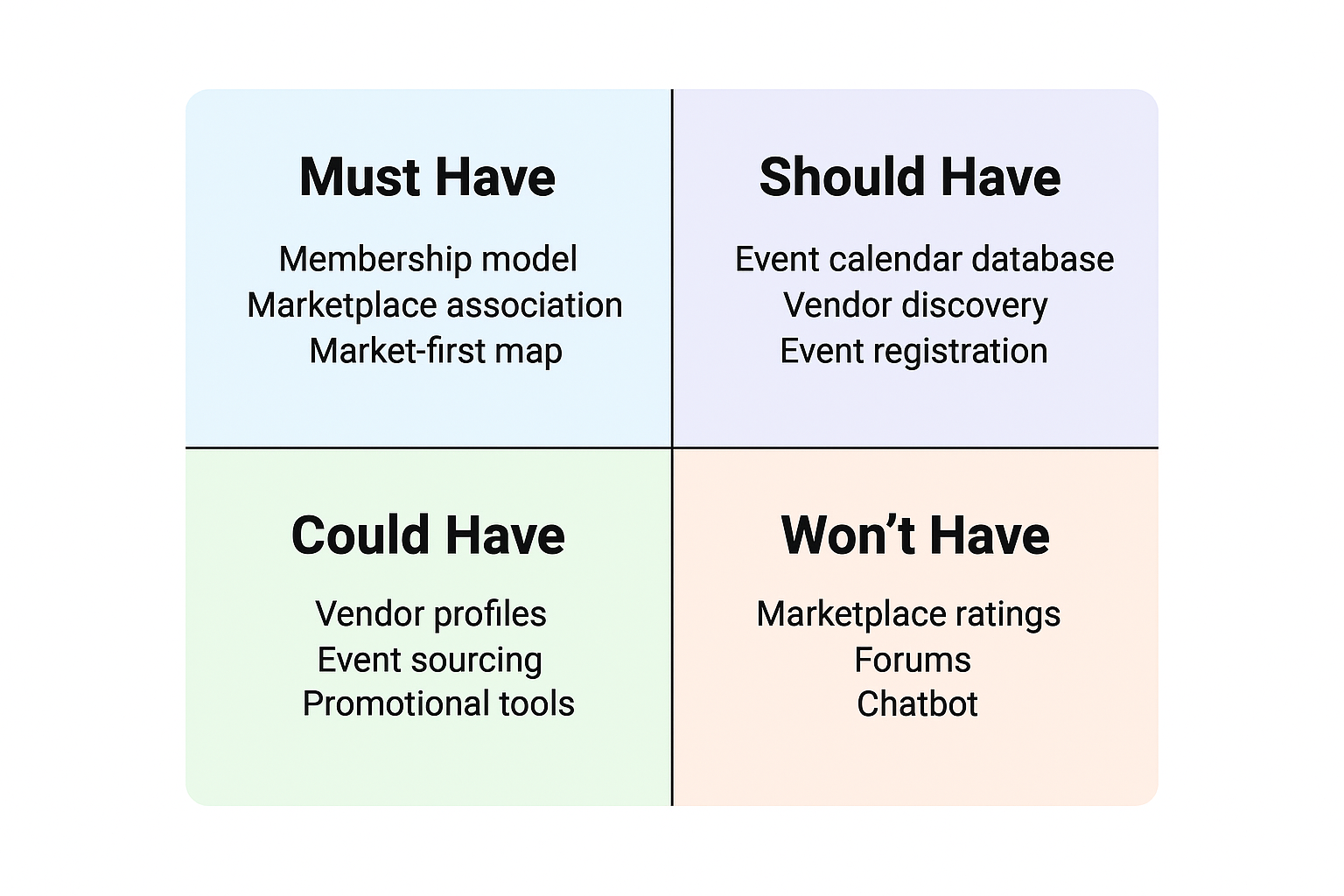
Using the MoSCow method approach, I sorted features, ideas, or requests into four clear categories:
Must Have, Should Have, Could Have, Won’t Have to begin scoping the effort and roadmap for FLIT
Must Have, Should Have, Could Have, Won’t Have to begin scoping the effort and roadmap for FLIT
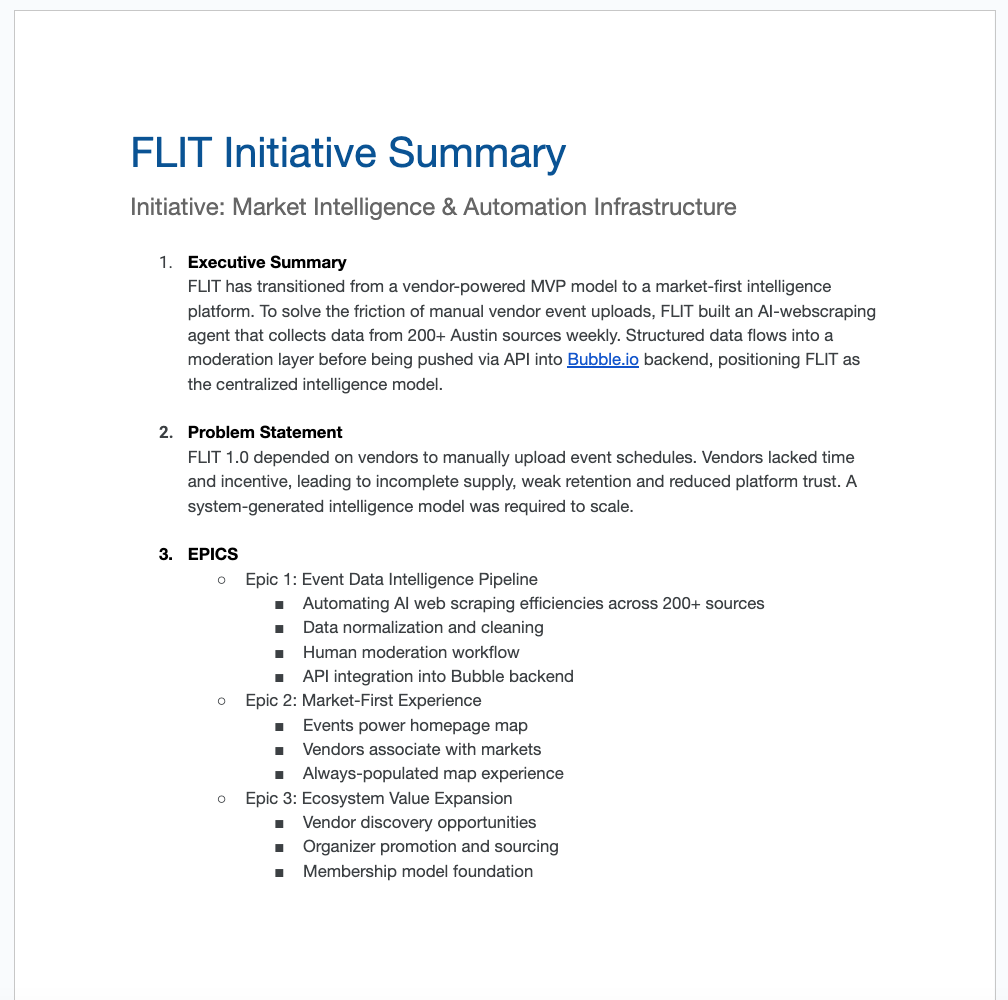
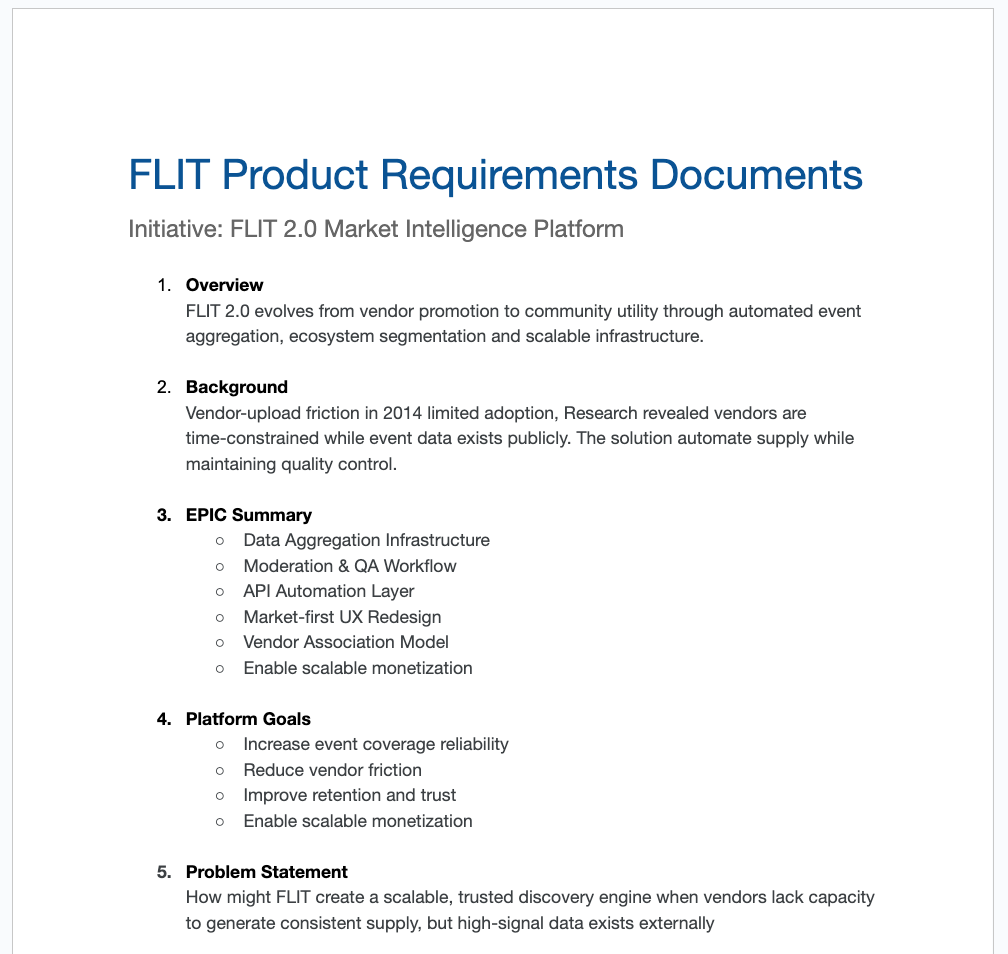
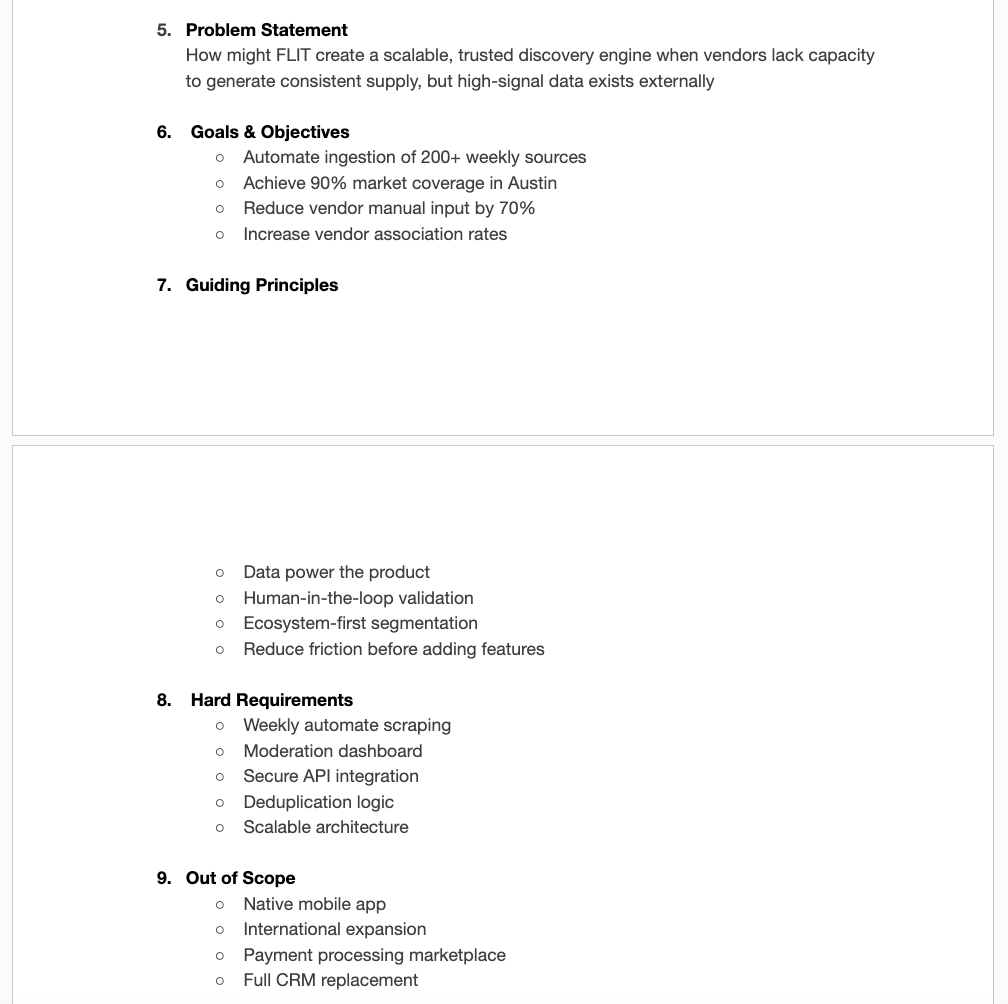
Initiative Summary and PRD
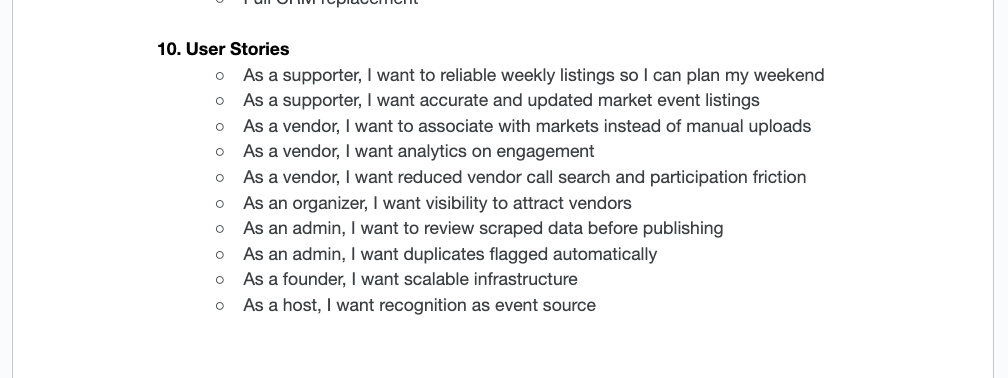
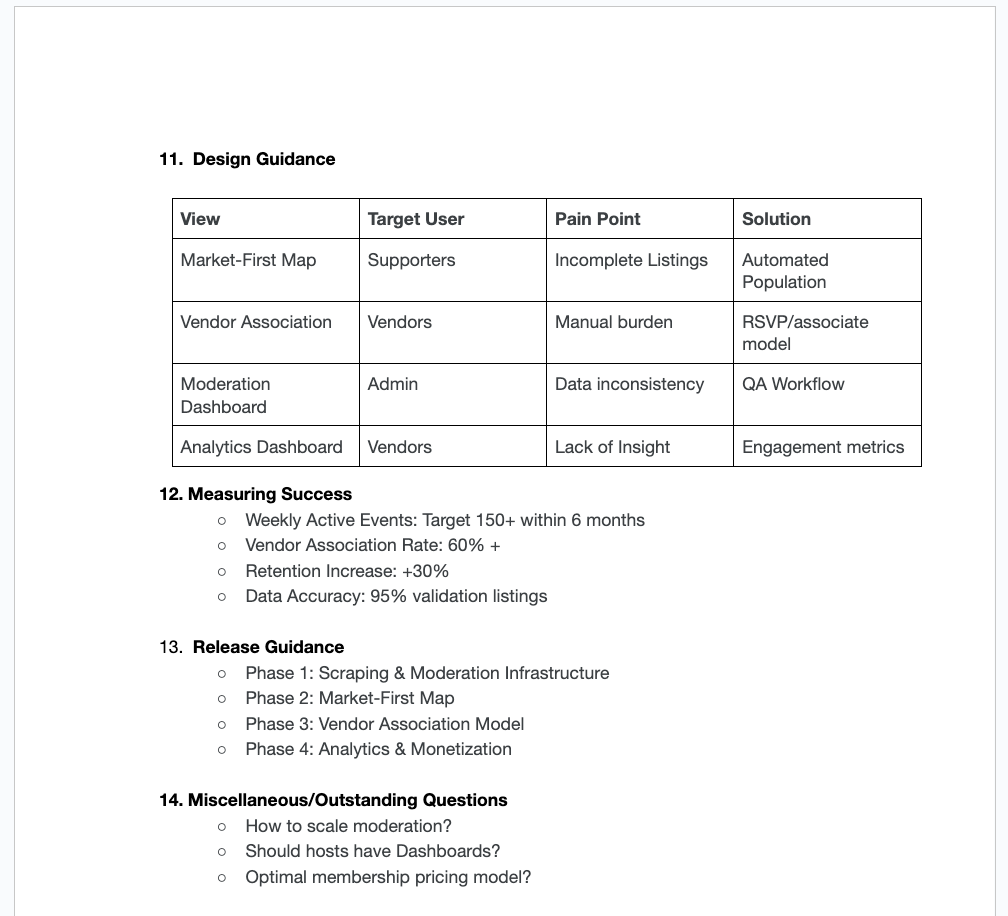
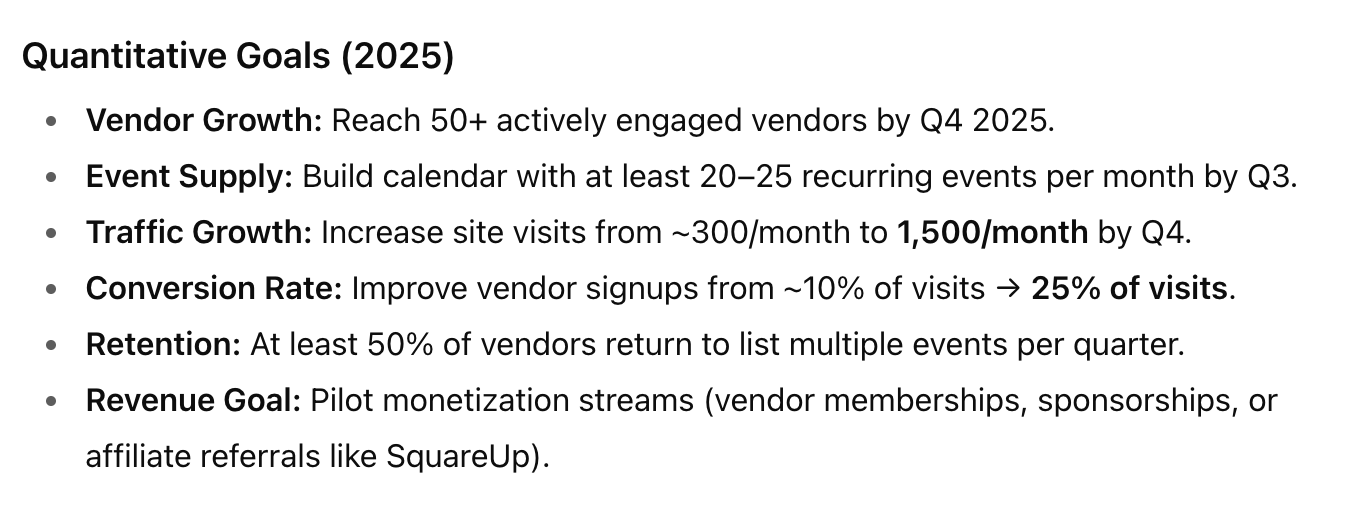
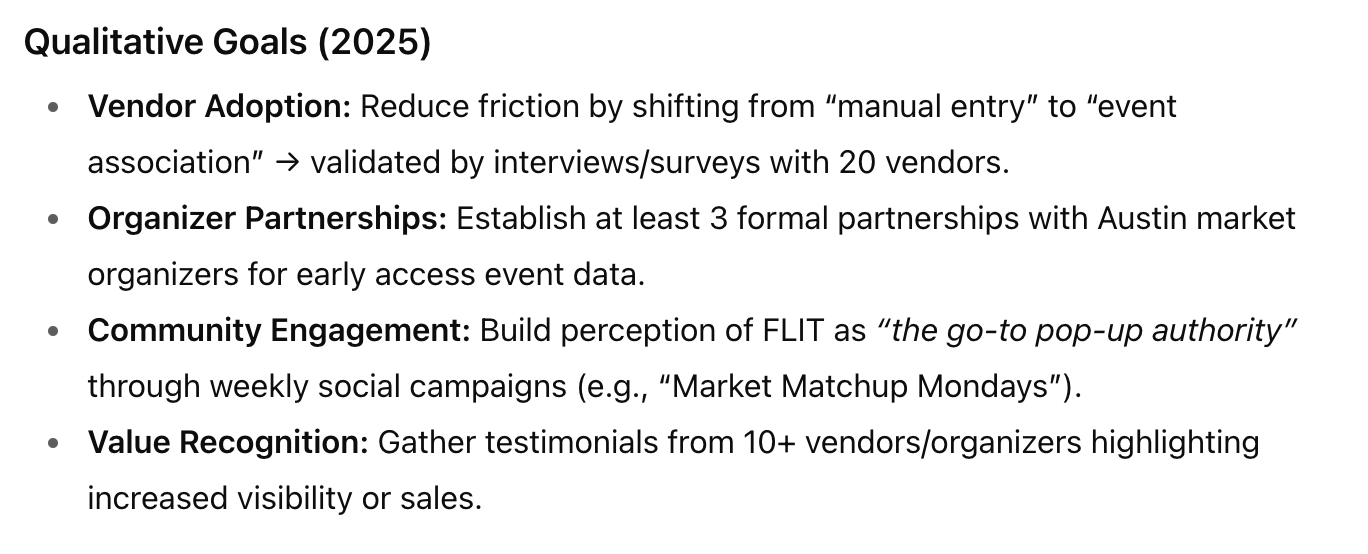
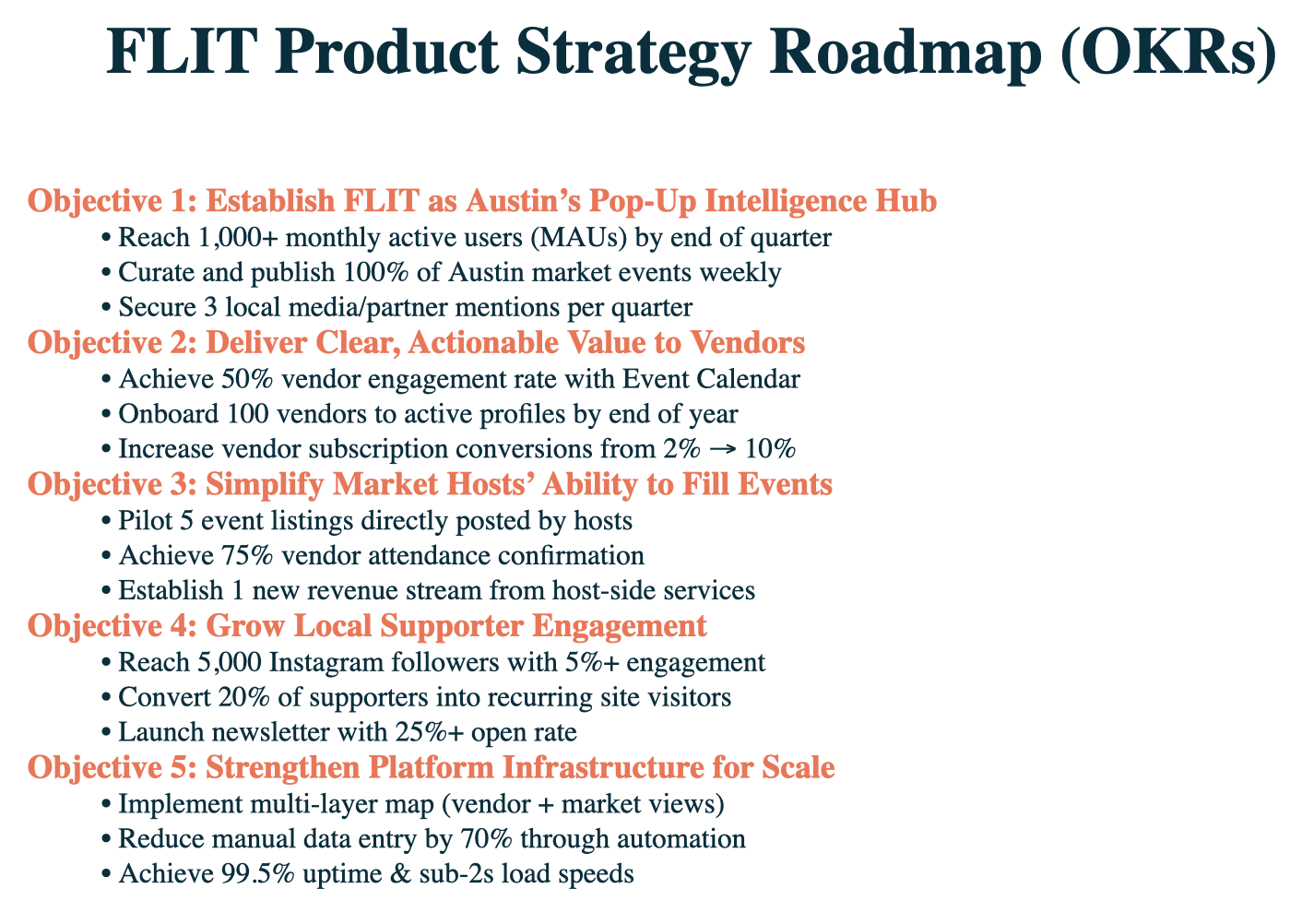
Product Roadmapping | Objective Key Results (OKRs)
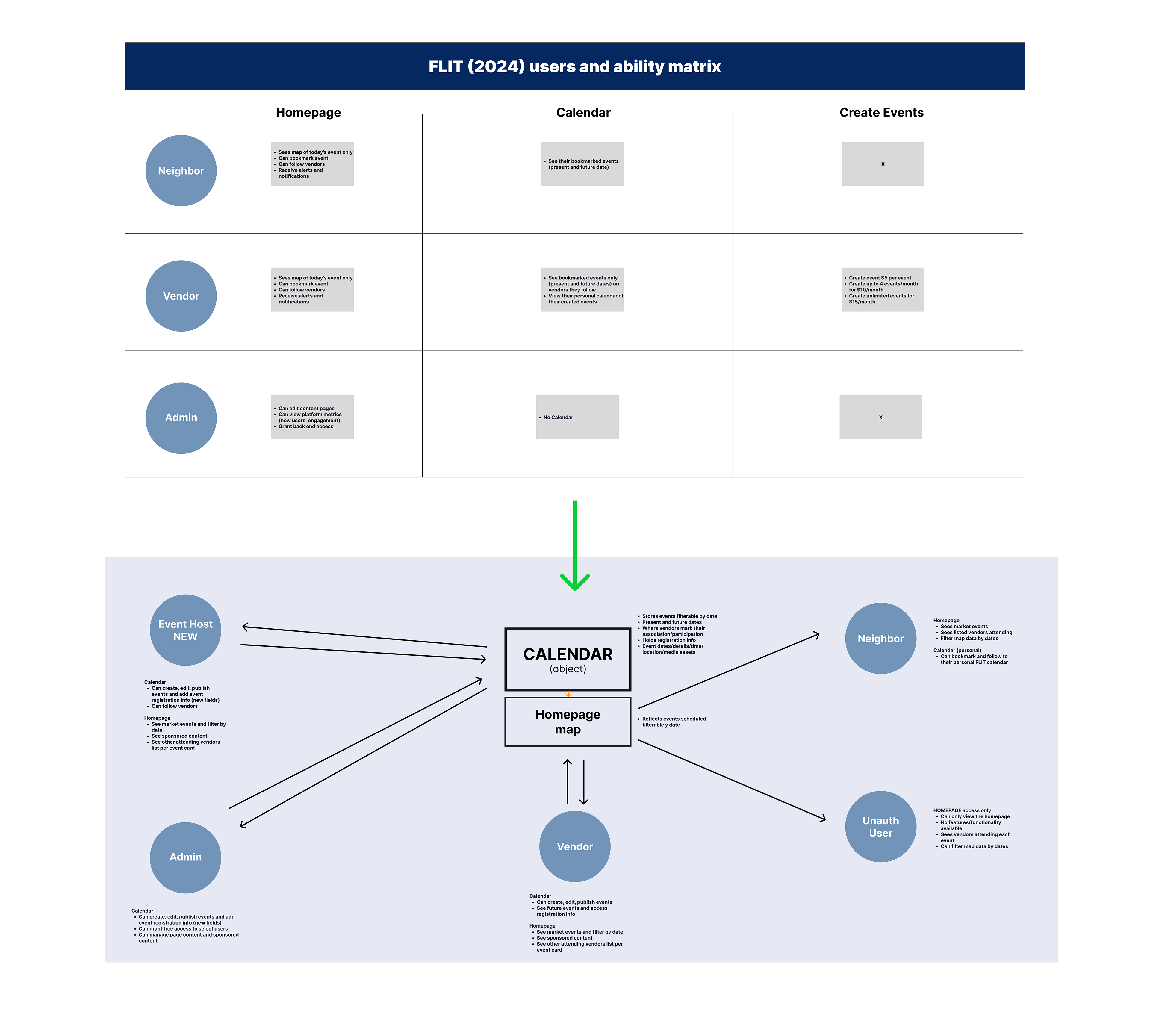
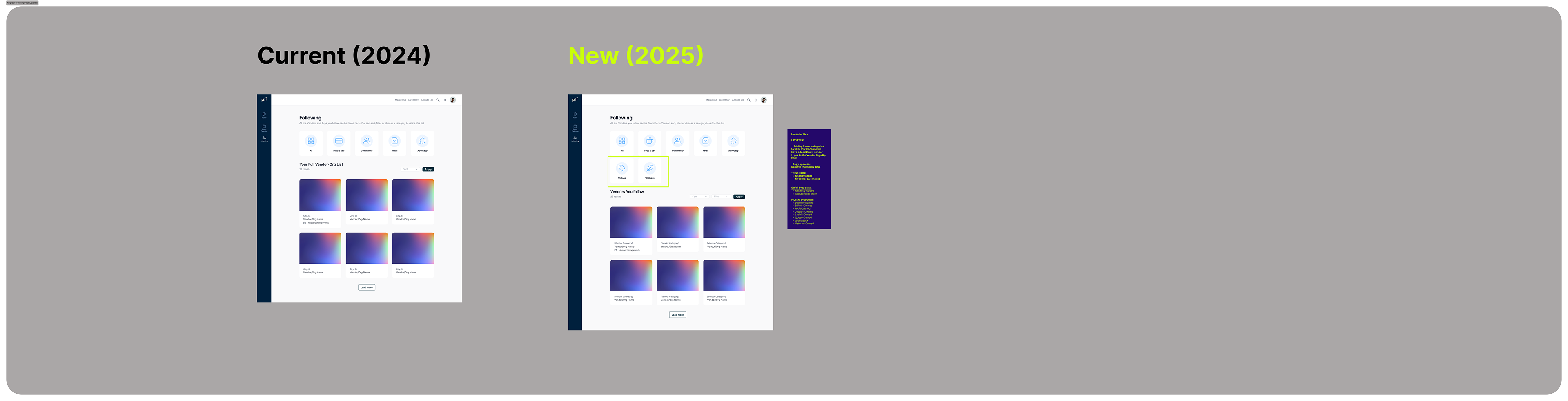
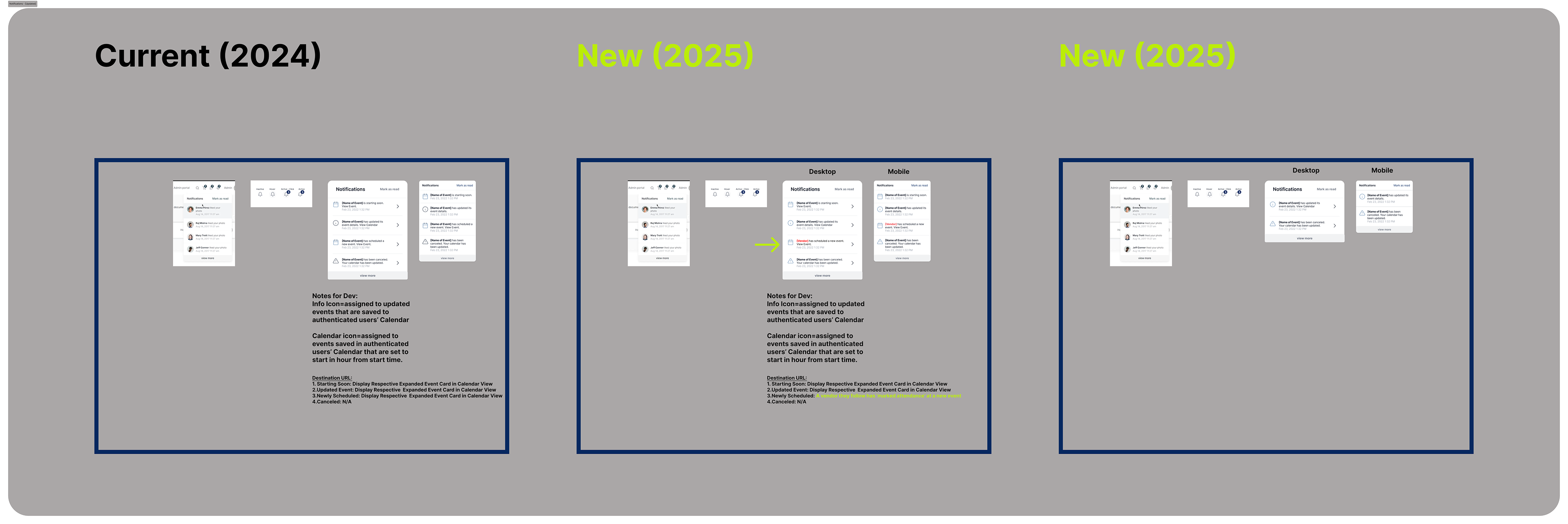
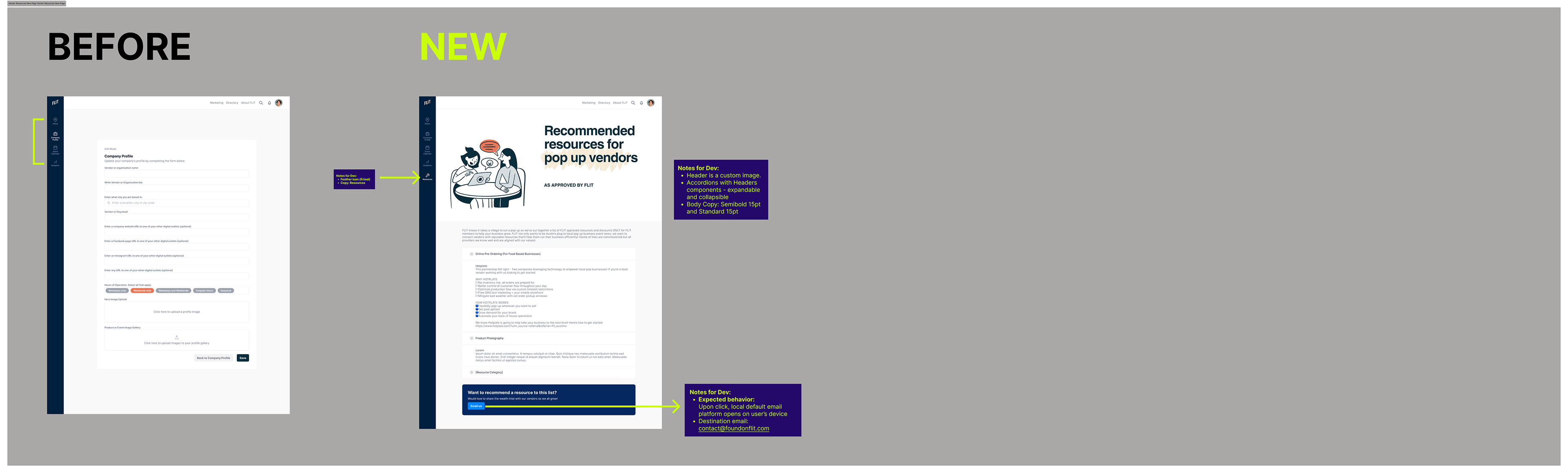
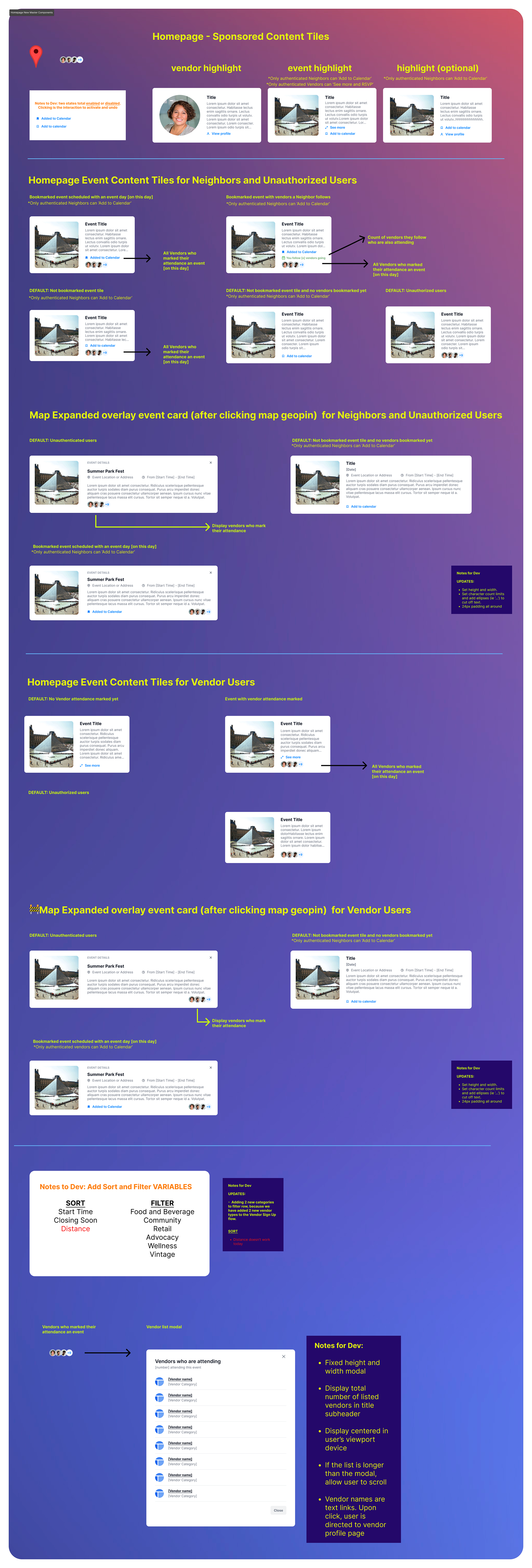
Designing the updates and new model
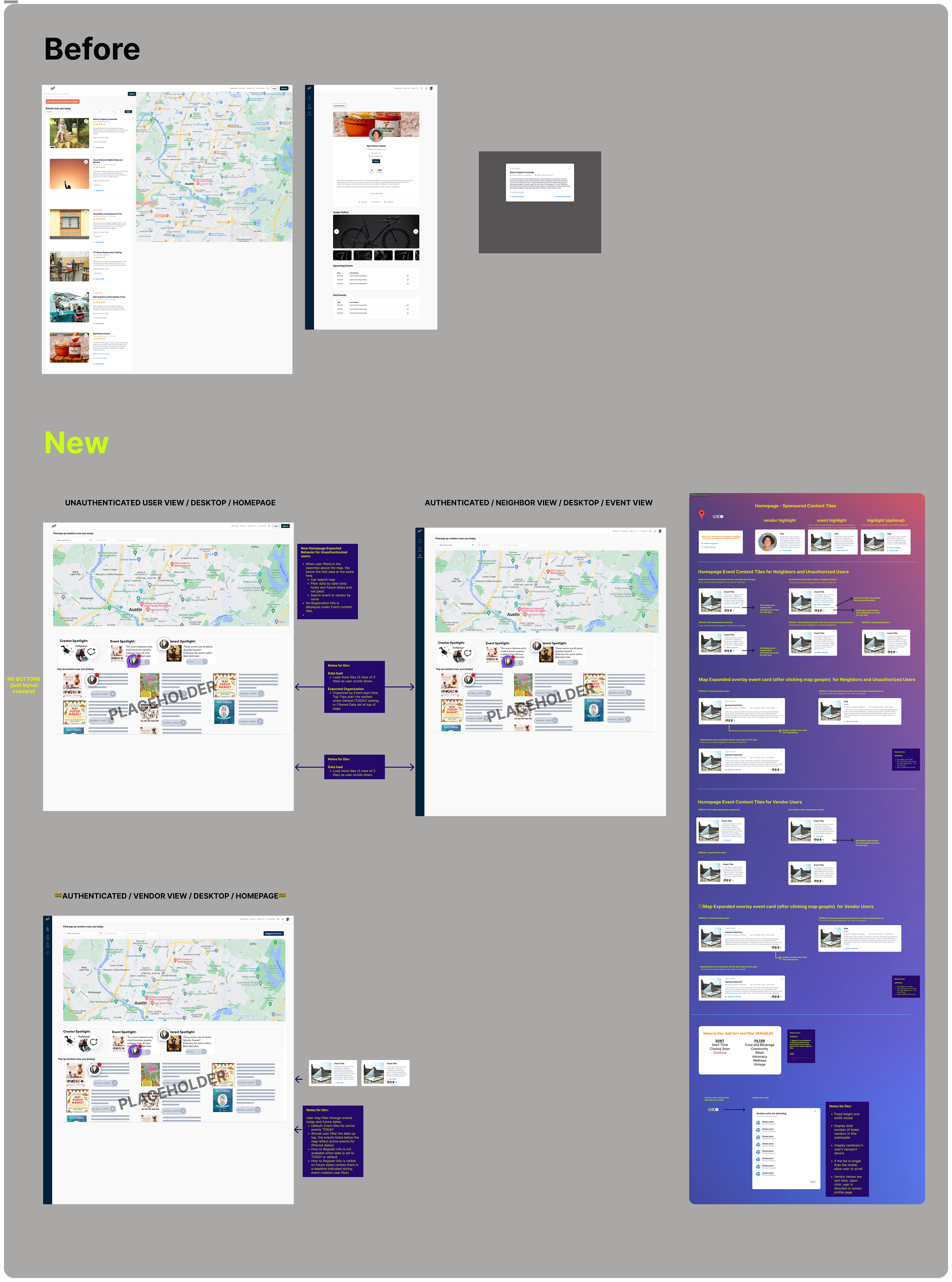
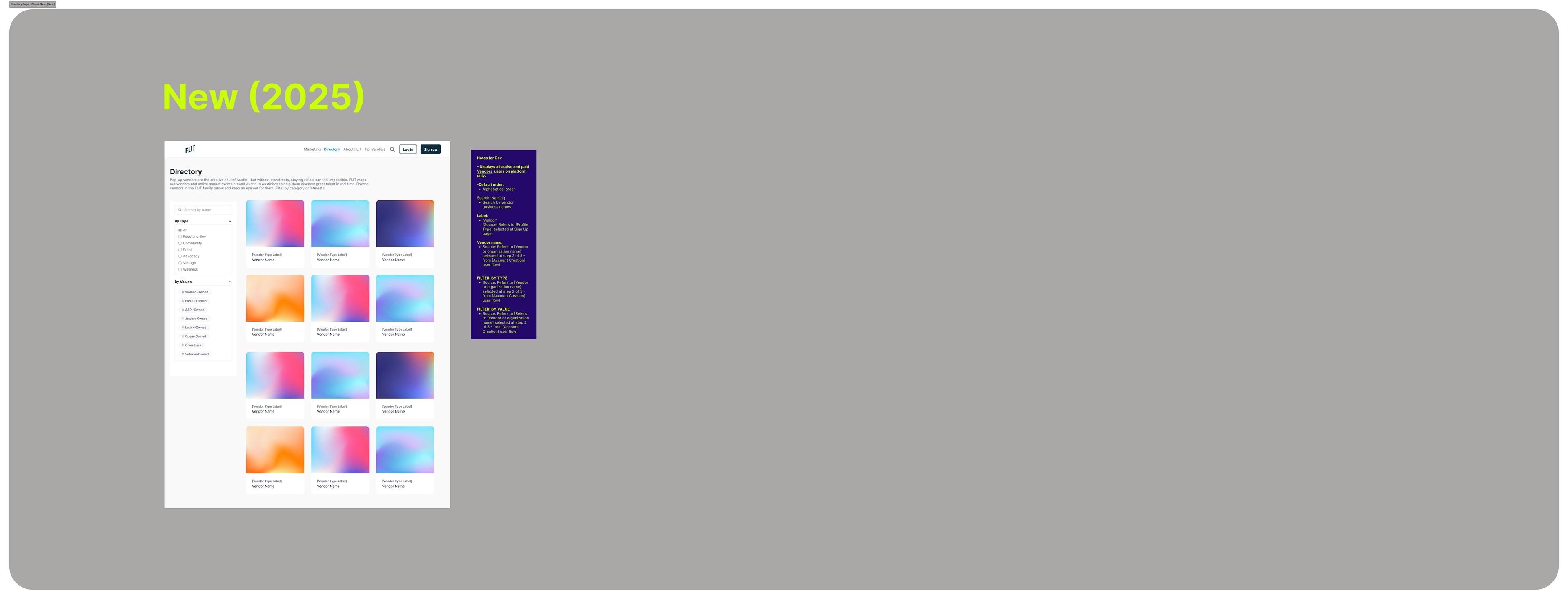
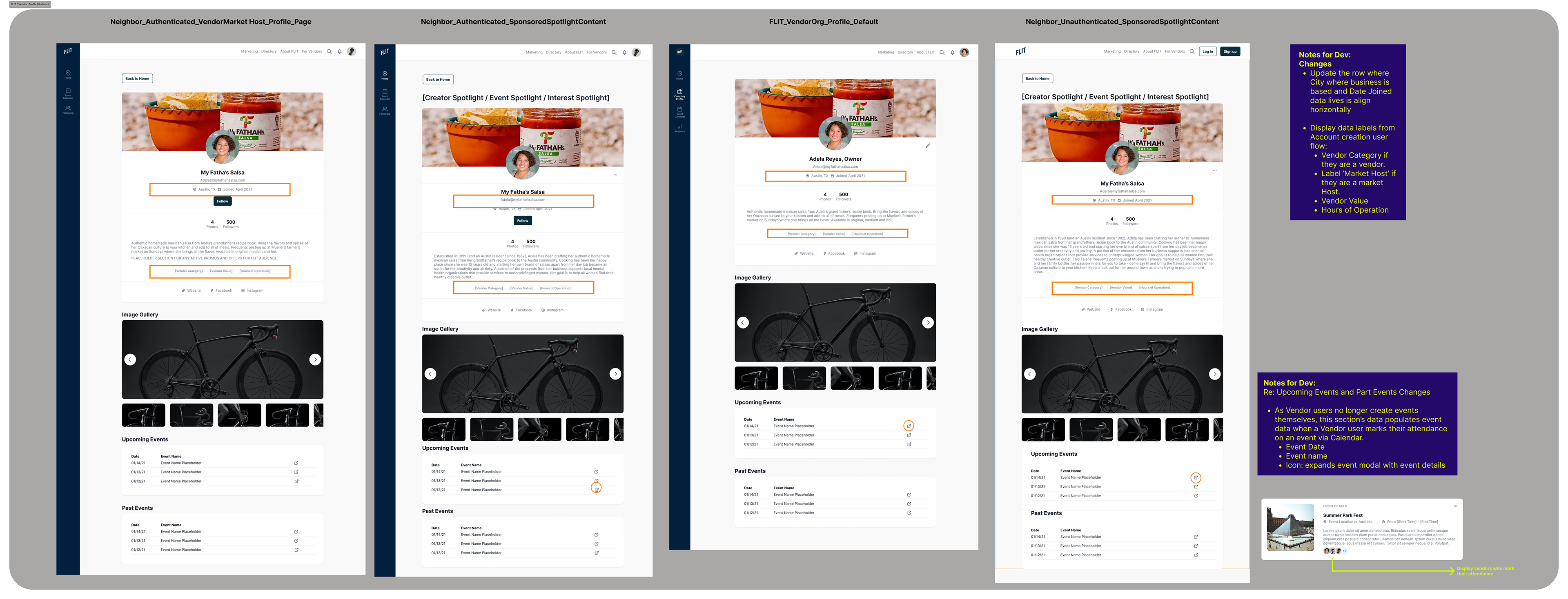
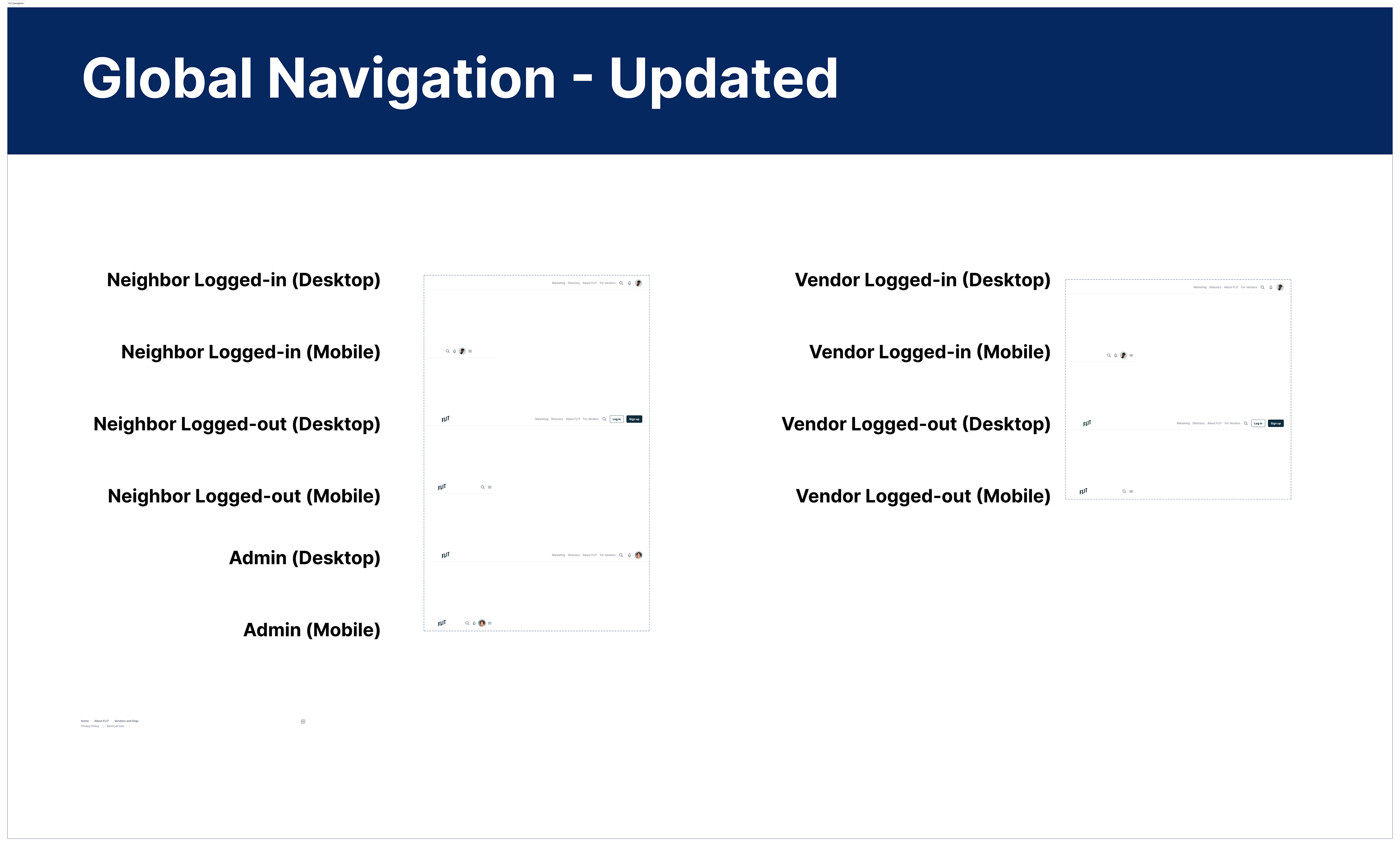
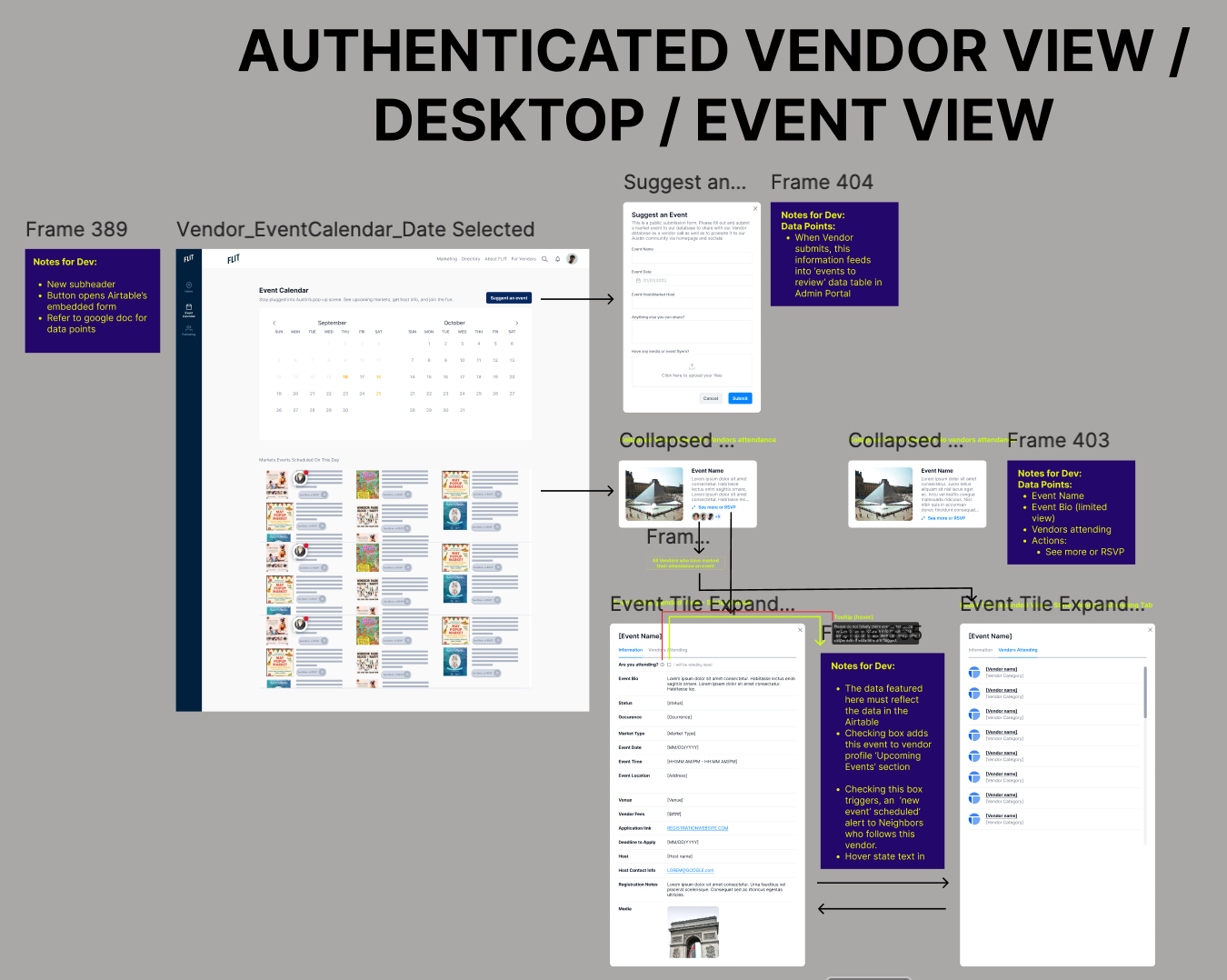
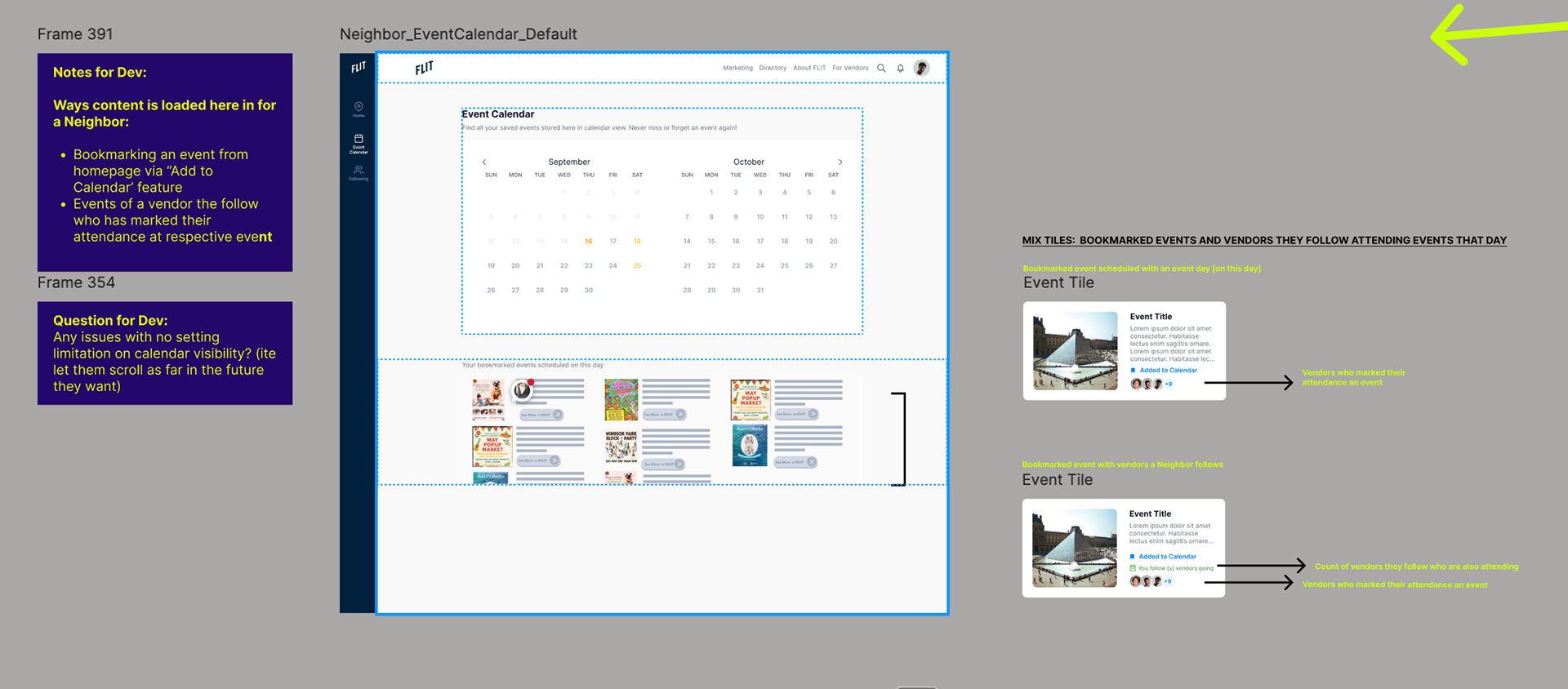
Tool used: Bubble.io, Figma, ChatGPT Pro, Relay (AI), Gemini (AI), Microsoft Excel, Instagram
special thanks to those supportive of me and my evolving venture